DropProof vs Locus: Which Delivery Management Platform Is Right for You?
Modern delivery operations require more than simply assigning orders to drivers. Businesses need to plan routes, manage drivers and vehicles, monitor deliveries, handle exceptions, and maintain reliable proof of delivery.
DropProof and Locus both address delivery and logistics operations, but they are designed with different levels of operational complexity in mind.
This comparison looks at order management, route planning, driver management, tracking, proof of delivery, fleet operations, and delivery execution to help businesses understand where each platform fits.
DropProof vs Locus at a Glance
| Feature | DropProof | Locus |
|---|---|---|
| Order Management | ✅ | ✅ |
| Manual Order Creation | ✅ | ✅ |
| Bulk Order Import | ✅ | ✅ |
| Order Export | ✅ | — |
| Route Planning | ✅ | ✅ |
| Route Assignment | ✅ | ✅ |
| Driver Management | ✅ | ✅ |
| Driver App | ✅ | ✅ |
| Real-Time Tracking | ✅ | ✅ |
| Proof of Delivery | ✅ | ✅ |
| Vehicle Management | ✅ | ✅ |
| Depot Management | ✅ | ✅ |
| Delivery Status Management | ✅ | ✅ |
| Analytics & Reporting | ✅ | ✅ |
| Dynamic Route Re-Optimization | — | ✅ |
| Automated Dispatch | — | ✅ |
| Multi-Carrier Management | — | ✅ |
| Hub Operations | — | ✅ |
| Capacity Management | — | ✅ |
| Customer Visibility | — | ✅ |
| Enterprise Integrations | — | ✅ |
Note: Feature availability can vary by product version and subscription plan. Verify current capabilities directly with each provider before making a purchasing decision.
What Is DropProof?
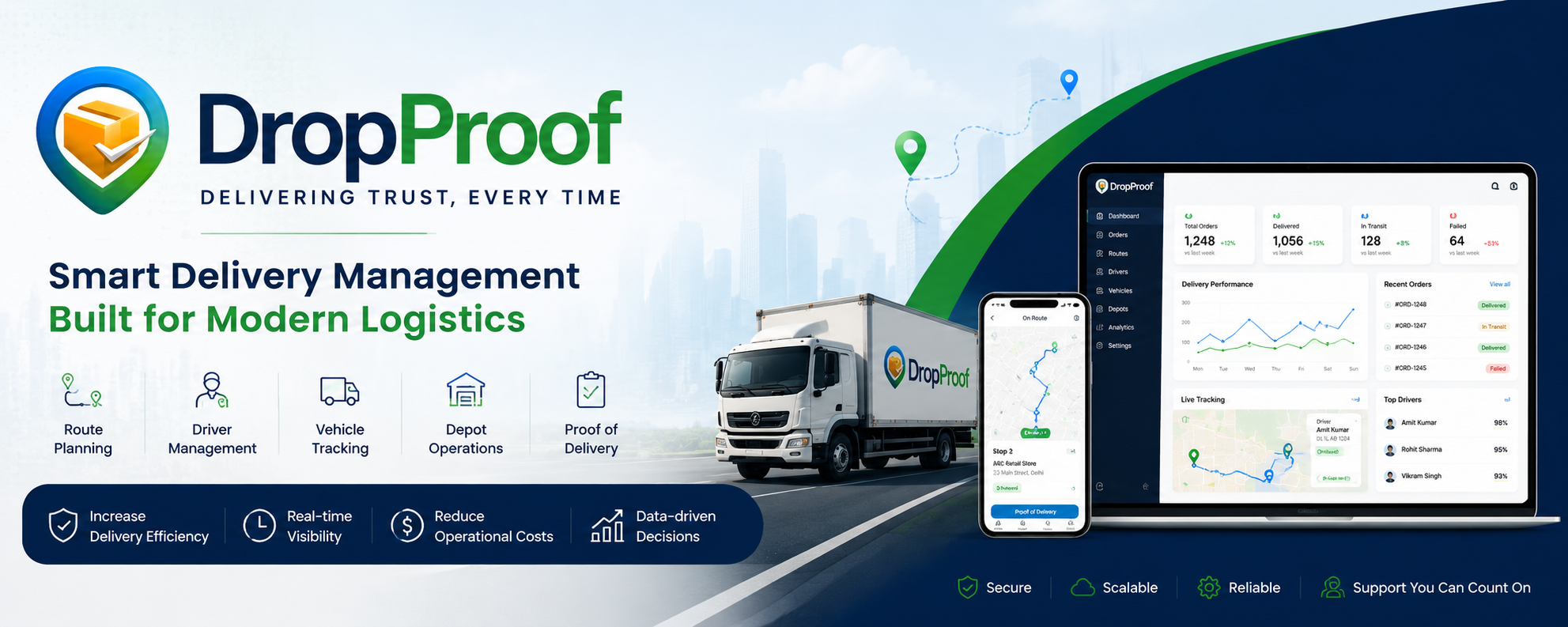
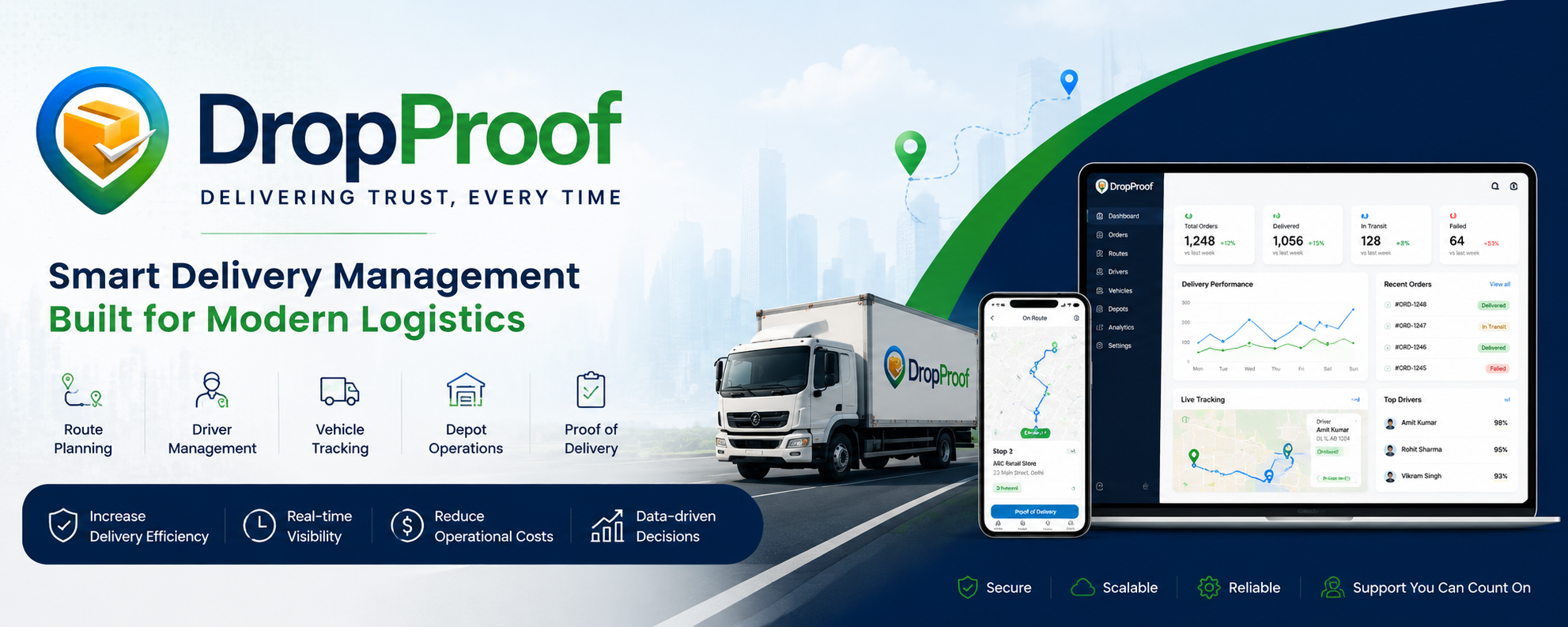
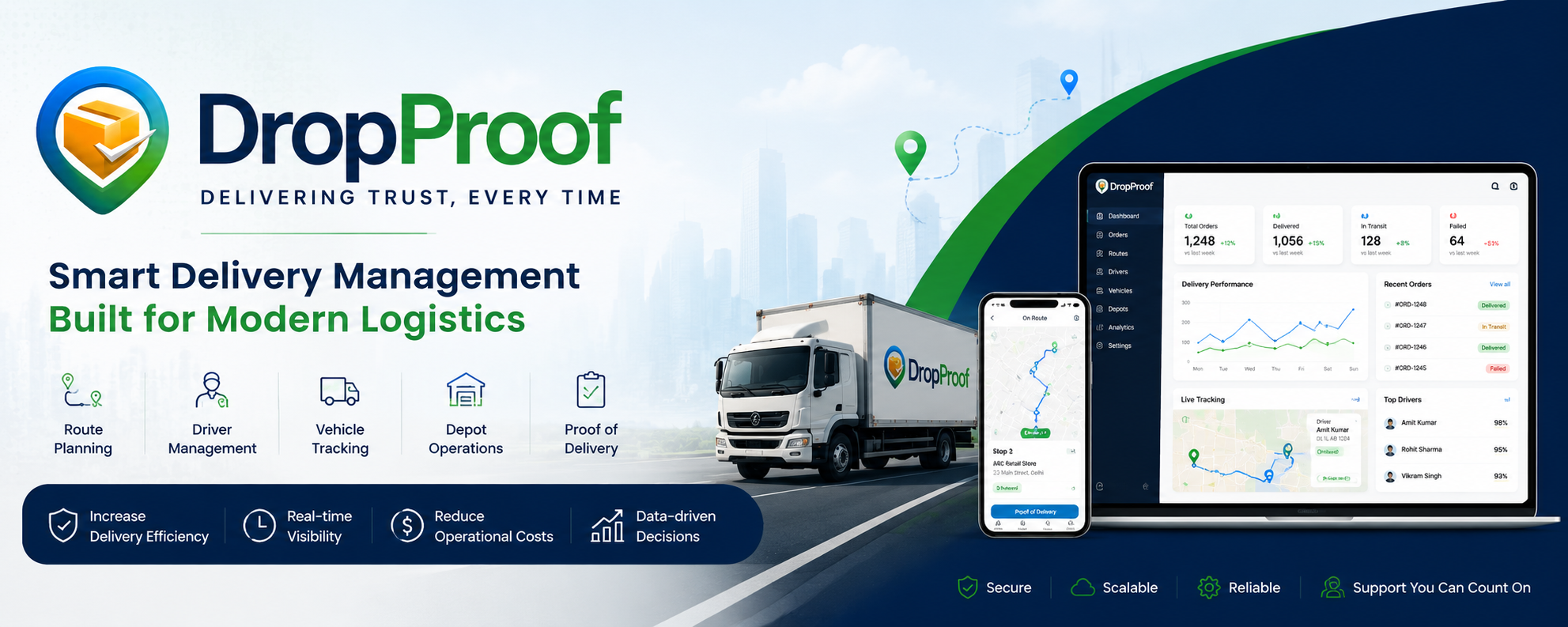
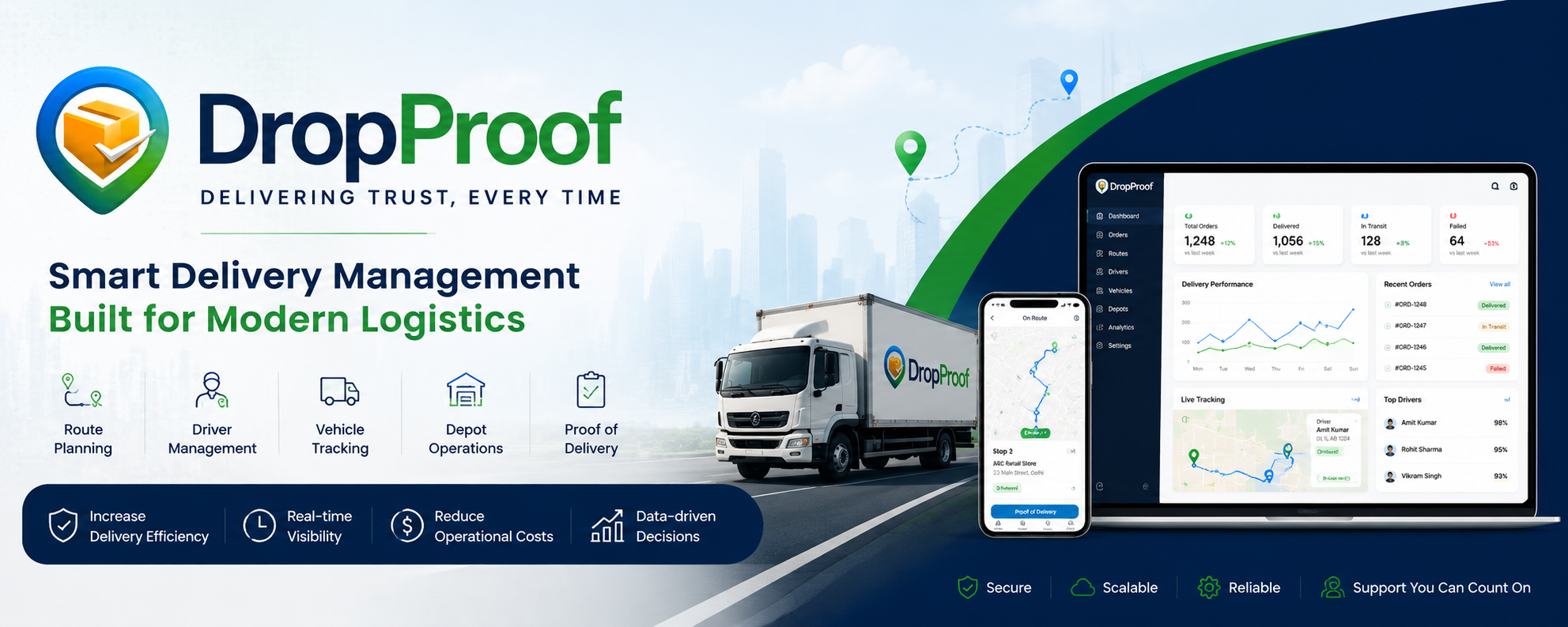
DropProof is a delivery and logistics management platform designed to connect core delivery operations in one centralized system.
The platform brings together:
- Orders
- Routes
- Drivers
- Vehicles
- Depots
- Delivery tracking
- Driver workflows
- Proof of delivery
A typical DropProof workflow looks like:
Create Order → Plan Route → Assign Driver → Track Delivery → Complete Delivery → Capture Proof
This gives delivery teams a centralized environment for managing daily delivery operations.
What Is Locus?
Locus is an enterprise logistics and transportation management platform focused on automating and optimizing complex delivery operations.
Its current platform covers areas including dispatch planning, AI-powered route optimization, real-time visibility, capacity management, hub operations, delivery orchestration, analytics, and customer experience.
Locus says its route optimization engine can account for 250+ real-world constraints, including traffic, vehicle capacity, driver hours, delivery windows, and service requirements.
It positions itself primarily for enterprise-scale logistics operations across retail, FMCG, e-commerce, 3PL, and other high-volume environments.
Order Management
Order management is the foundation of the delivery workflow.
DropProof
DropProof allows teams to:
- Create orders manually
- Import orders in bulk
- Export orders
- View order information
- Manage order status
- Assign orders to routes
This makes it possible to move from order creation directly into route planning and delivery execution.
Locus
Locus also supports order intake and orchestration as part of its wider logistics platform. Its current offering connects order capture, allocation, dispatch planning, and fulfillment workflows.
The difference
DropProof focuses on providing a straightforward operational workflow around orders and deliveries.
Locus extends order orchestration into a broader enterprise logistics environment.
Route Planning
Route planning is one of the most important areas where the platforms differ.
DropProof
DropProof allows teams to create routes and assign orders to them.
The workflow is:
Create Route → Select Orders → Add Orders → Manage Stops → Assign Driver
This gives dispatchers a structured way to prepare routes for delivery.
Locus
Locus offers AI-powered route optimization designed for large-scale operations.
Its routing engine considers more than 250 operational constraints, including traffic, vehicle capacity, driver hours, time windows, and service requirements.
Locus also supports dynamic re-optimization when conditions change during the day.
The difference
DropProof: Focused route creation and delivery operations.
Locus: Advanced AI-driven route optimization and dynamic re-routing for complex enterprise operations.
If your operation requires sophisticated optimization across thousands of deliveries and many constraints, Locus has a significantly broader routing capability.
Driver Management
DropProof
DropProof provides a dedicated driver-management module.
Operations teams can:
- Add drivers
- Edit driver information
- View driver status
- Monitor availability
- Manage driver records
- Assign routes
This connects driver management directly with route and delivery operations.
Locus
Locus provides driver and rider management as part of its broader dispatch and execution platform. Its Driver Companion App supports task management, navigation, execution updates, exceptions, and proof of delivery.
Driver App
DropProof connects the operations dashboard with the driver's mobile workflow.
The driver can:
Receive Route → View Stops → Open Delivery → Navigate → Complete Delivery → Submit POD
This provides a direct connection between dispatch operations and field execution.
Locus also provides a comprehensive driver app supporting navigation, task management, delivery updates, exception handling, and proof of delivery.
Real-Time Tracking
DropProof
DropProof provides operational visibility into:
- Drivers
- Routes
- Stops
- Delivery progress
- Order status
Operations teams can monitor active delivery activity from the platform.
Locus
Real-time visibility is a major component of Locus.
Its platform provides live visibility into vehicles, deliveries, routes, and exceptions, with features such as predictive ETA updates and geofenced alerts.
Difference
DropProof provides the core operational tracking experience, while Locus extends visibility into a broader enterprise control-tower and exception-management workflow.
Proof of Delivery
Digital proof of delivery creates a record that a delivery has been completed.
DropProof
The DropProof driver workflow supports proof-of-delivery actions such as:
- Photos
- Signatures
- Notes
- Delivery status
Locus
Locus supports electronic proof of delivery through its driver application, including digital signatures, photos, timestamps, and other delivery records.
Both platforms therefore provide a digital approach to completing and verifying deliveries.
Vehicle Management
DropProof includes a dedicated vehicle-management workflow.
Teams can:
- Add vehicles
- Edit vehicle information
- View vehicles
- Manage vehicle records
- Connect vehicles with delivery operations
Locus also considers vehicle characteristics and availability within its route and dispatch optimization. Its routing system can account for vehicle capacity and vehicle-related operational constraints.
Depot & Hub Operations
DropProof provides a Depots module for managing operational locations.
This helps businesses maintain depot information as part of their delivery structure.
Locus goes further into hub operations, with capabilities around shipment handling, sorting, scanning, picklisting, and dock-to-vehicle workflows.
The difference
DropProof focuses on depot management as part of the delivery operation.
Locus provides a broader hub-operations layer designed for larger logistics networks.
Fleet & Capacity Management
DropProof provides the core resources needed to manage:
Drivers + Vehicles + Routes + Orders
Locus provides a broader capacity-management layer that can forecast and coordinate fleet and driver capacity around demand fluctuations and peak periods.
This becomes particularly relevant for businesses managing large fleets or multiple delivery hubs.
Automated Dispatch
This is another major difference.
DropProof currently provides a workflow where operations teams create routes, select orders, and assign deliveries.
Locus offers automated dispatch and resource allocation using AI-driven logic, including matching orders with drivers and vehicles based on operational constraints.
For enterprises looking to automate large-scale dispatch decisions, Locus has a broader capability here.
Multi-Carrier Operations
DropProof is primarily focused on managing the delivery operation and its operational resources.
Locus supports broader carrier and fleet orchestration, including captive, contracted, outsourced, and hybrid fleets.
Locus also describes its ShipFlex offering as a multi-carrier parcel management solution with a large pre-integrated carrier network.
Analytics & Reporting
Both platforms provide visibility into delivery operations.
DropProof
DropProof can provide operational information around:
- Orders
- Routes
- Drivers
- Delivery status
- Delivery activity
Locus
Locus provides a broader analytics and insights layer designed for operational and strategic decision-making across logistics networks.
For organizations managing complex, multi-region operations, this broader analytics capability may be important.
Who Is DropProof Best For?
DropProof can be a strong fit for businesses that need to centralize their everyday delivery operations:
🚚 Logistics Companies
Manage routes, drivers, vehicles, orders, and deliveries.
📦 Distribution Businesses
Coordinate recurring deliveries across customers and locations.
🛒 E-commerce Delivery Teams
Manage last-mile delivery execution and driver workflows.
🏭 FMCG & Wholesale
Coordinate delivery operations across multiple customers and routes.
🚛 Growing Delivery Teams
Bring core delivery operations together without introducing unnecessary operational complexity.
Who Is Locus Best For?
Locus is particularly positioned toward enterprise-scale logistics networks.
Its platform is designed for organizations managing:
- Large delivery volumes
- Multiple hubs
- Complex routing constraints
- Multiple fleet types
- Contracted or outsourced fleets
- Multi-carrier networks
- Advanced dispatch requirements
- Enterprise logistics orchestration
Locus says it has optimized more than 1.5 billion deliveries and serves 360+ enterprise customers across 30+ countries.
DropProof vs Locus: Which Should You Choose?
Choose DropProof if you need:
- Order management
- Route creation and assignment
- Driver management
- Vehicle management
- Depot management
- Delivery tracking
- Driver app workflows
- Proof of delivery
- Bulk order import/export
- A centralized delivery-management workflow
Consider Locus if you need:
- AI-powered route optimization
- Dynamic route re-optimization
- Automated dispatch
- Large-scale capacity management
- Multi-carrier orchestration
- Hub operations
- Enterprise control-tower capabilities
- Complex logistics constraints
- Large-scale enterprise deployment
DropProof vs Locus: Final Verdict
DropProof and Locus address different levels of logistics complexity.
DropProof focuses on connecting the essential delivery workflow:
Orders → Routes → Drivers → Vehicles → Deliveries → Proof of Delivery
Locus extends beyond core delivery management into AI-powered dispatch, advanced route optimization, dynamic re-routing, hub operations, capacity management, carrier orchestration, and enterprise logistics intelligence.
For a growing delivery operation looking for a focused platform to manage its core workflows, DropProof can provide a simpler operational foundation.
For a large enterprise managing thousands of deliveries, multiple hubs, complex constraints, multiple fleets, and sophisticated optimization requirements, Locus may be the more appropriate enterprise platform.
The right choice ultimately depends on delivery volume, operational complexity, routing requirements, fleet structure, integrations, and budget.
Ready to explore DropProof?
Plan smarter. Manage deliveries. Track operations. Deliver with confidence.
[Book a Demo] | [Explore DropProof]