WhatsApp Delivery Management Alternatives: 7 Better Solutions in 2026
Managing deliveries through WhatsApp may seem convenient when you have a small team. Drivers can receive order details, share their location, send delivery updates, and upload photos directly into a group chat.
But as delivery volume grows, WhatsApp can quickly become difficult to manage.
Messages get buried, order information becomes scattered, route planning stays manual, and finding proof of delivery can take time.
A dedicated delivery-management platform can bring these processes into one structured workflow.
In this guide, we'll compare 7 alternatives to managing deliveries through WhatsApp in 2026.
Why Businesses Manage Deliveries Through WhatsApp
WhatsApp is already familiar to most drivers and operations teams.
Businesses often use it to:
- Send delivery addresses
- Assign orders to drivers
- Share route information
- Send delivery updates
- Share delivery photos
- Communicate with customers
- Report failed deliveries
- Share proof of delivery
- Coordinate with dispatchers
For a small operation, this can be enough.
The problem starts when the number of orders, drivers, customers, and delivery locations increases.
Problems With WhatsApp Delivery Management
1. Messages Get Lost
Important order information can quickly disappear inside busy group conversations.
2. No Centralized Order Management
Orders, driver assignments, addresses, and delivery statuses may be spread across multiple chats.
3. Manual Route Planning
Drivers or dispatchers may still have to manually organize delivery stops.
4. Difficult POD Management
Delivery photos and documents can become buried among hundreds of other messages.
5. Limited Operational Visibility
It can be difficult for dispatchers to see the status of every active delivery in one place.
6. Manual Reporting
Operations teams may need to manually collect information from different chats to create reports.
7. Difficult to Scale
What works for 5 drivers may become difficult to manage with 50 or 100 drivers.
What Is a WhatsApp Delivery Management Alternative?
A delivery-management platform replaces scattered communication with a structured workflow.
Instead of:
WhatsApp → Messages → Photos → Calls → Manual Updates
the workflow becomes:
Order → Route → Driver → Track → Deliver → POD
WhatsApp can still be used for communication where needed, but the actual delivery operation is managed through a dedicated system.
7 Best WhatsApp Delivery Management Alternatives
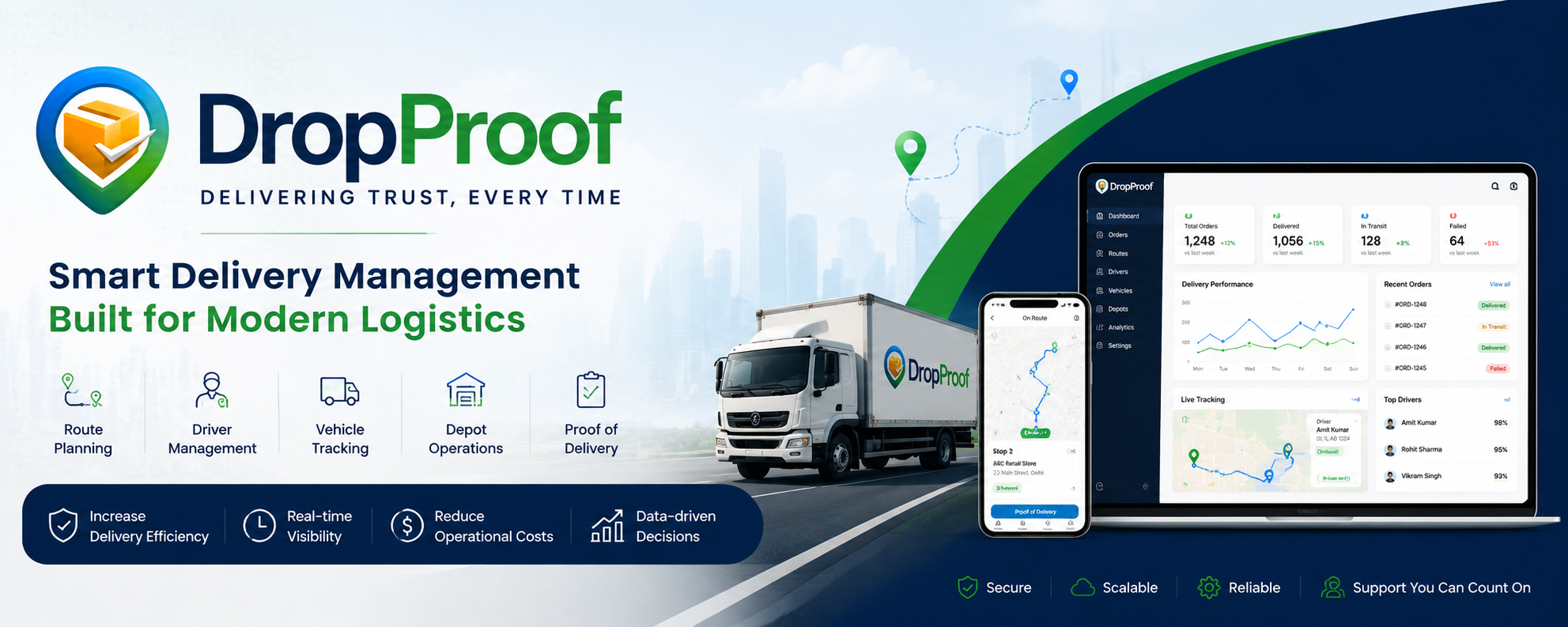
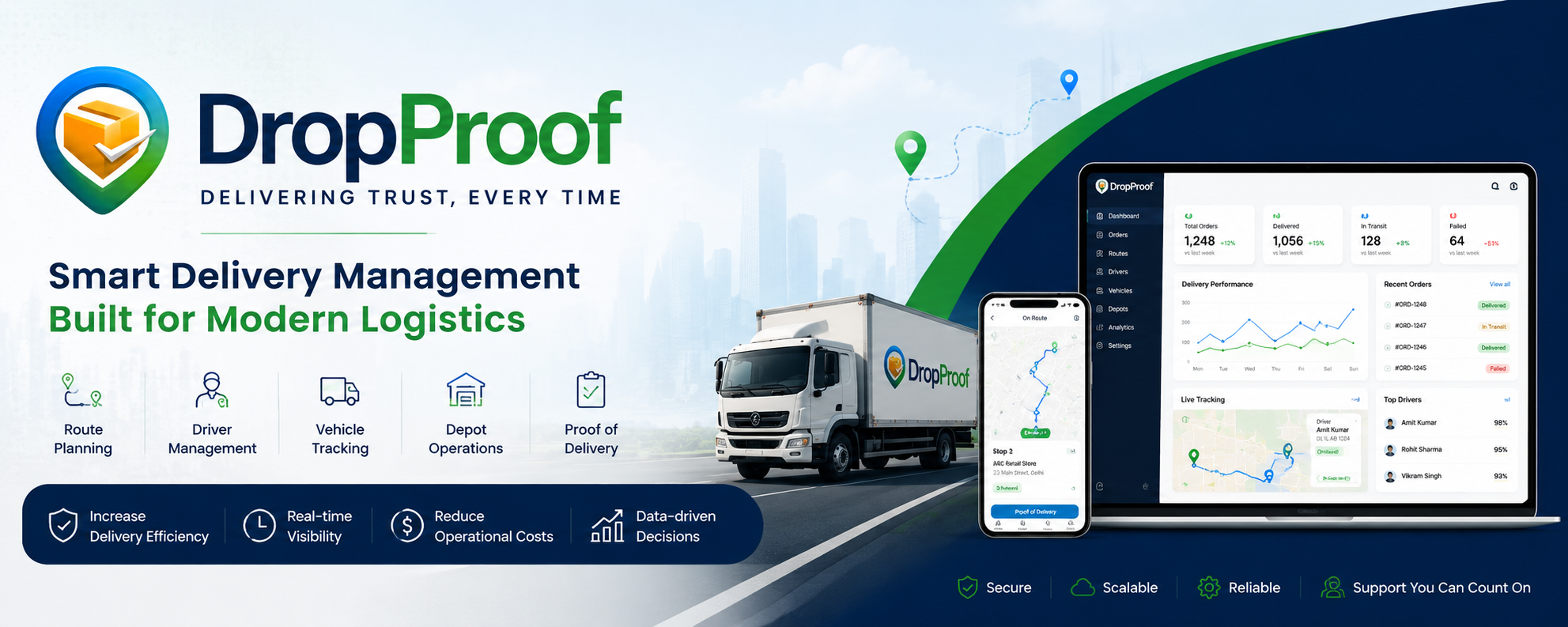
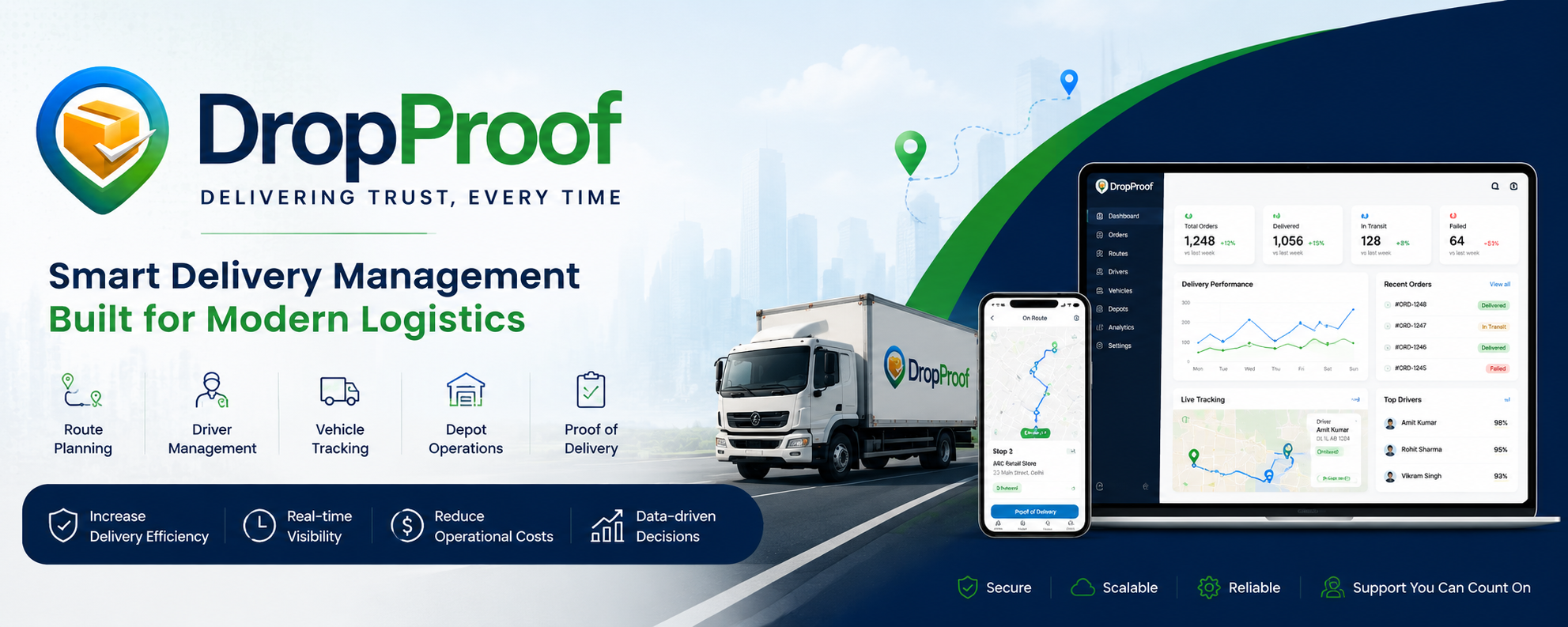
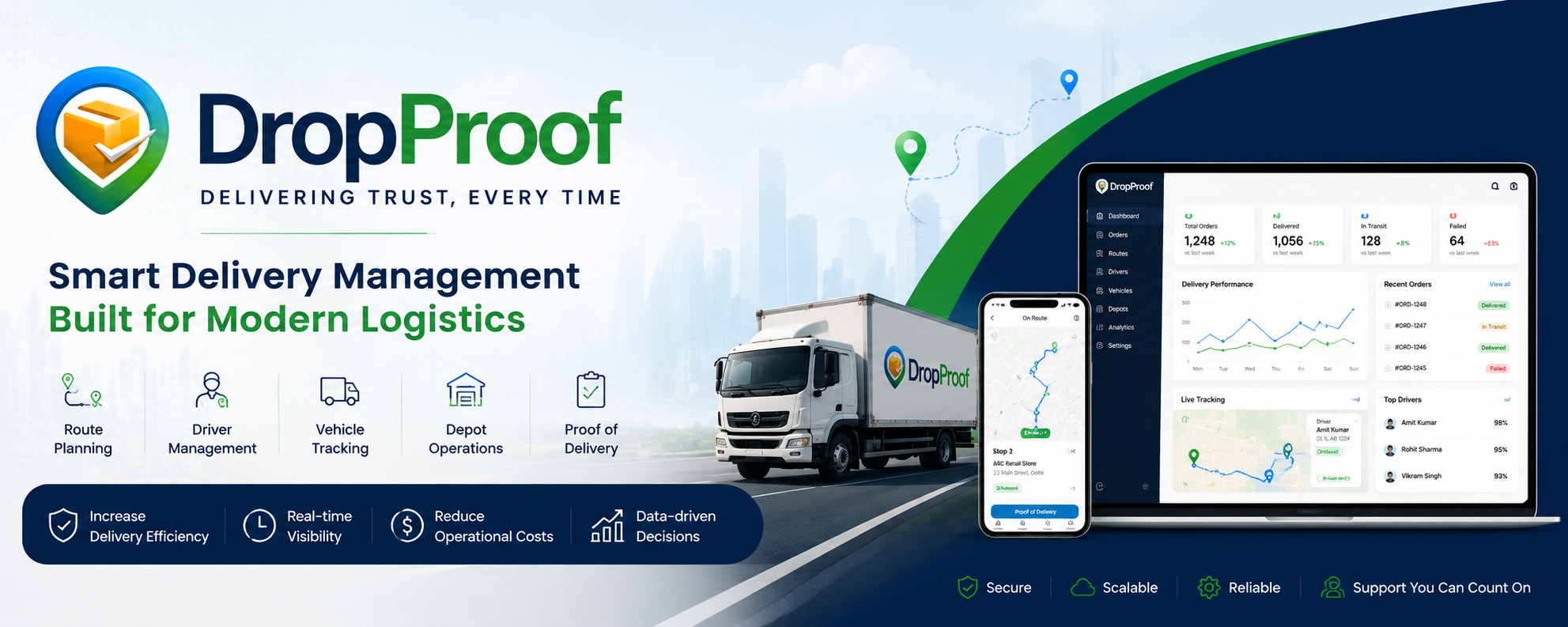
1. DropProof
Best for: Complete delivery management.
DropProof is designed to centralize the delivery workflow in one platform.
It provides:
- Order management
- Route planning
- Driver management
- Vehicle management
- Depot management
- Real-time tracking
- Delivery execution
- Digital proof of delivery
- Delivery photos
- Digital signatures
- GPS verification
- Delivery notes
- Reporting
- API integrations
The workflow can be managed through:
Order → Route → Driver → Track → Deliver → Capture POD
Why consider DropProof?
Instead of using WhatsApp as the main operational system, DropProof gives your team a dedicated place to manage orders, drivers, routes, tracking, and delivery proof.
You can reduce dependence on scattered messages while keeping communication organized around the actual delivery workflow.
2. Onfleet
Best for: Last-mile delivery management.
Onfleet provides tools for dispatching, route management, driver tracking, customer communication, and delivery operations.
It's a relevant option for businesses that have outgrown informal delivery coordination through messaging apps.
3. Track-POD
Best for: Digital proof of delivery.
Track-POD focuses on electronic proof of delivery and digital delivery documentation.
It can be useful for businesses that primarily want to replace WhatsApp-based delivery photos, signatures, and delivery records with a structured digital POD workflow.
4. Routific
Best for: Route planning and optimization.
Routific focuses on route planning and optimization.
It can be useful for businesses that currently organize delivery routes manually through WhatsApp or spreadsheets.
5. Circuit
Best for: Route planning and delivery operations.
Circuit provides route-planning and delivery-management tools for multi-stop delivery operations.
It can help teams move away from manually coordinating routes through group chats.
6. OptimoRoute
Best for: Route optimization and scheduling.
OptimoRoute focuses on route optimization and delivery scheduling.
It can be considered by businesses looking to replace manual route planning with software-based optimization.
7. LogiNext
Best for: Logistics and delivery optimization.
LogiNext provides logistics technology covering areas such as route optimization, fleet operations, and delivery management.
It can be relevant for businesses looking for broader logistics capabilities.
WhatsApp vs Delivery Management Software
| Capability | Delivery Platform | |
|---|---|---|
| Order management | ❌ | ✅ |
| Route planning | Manual | ✅ |
| Driver assignment | Manual | ✅ |
| Real-time tracking | Limited | ✅ |
| Digital POD | Manual | ✅ |
| Delivery photos | ✅ | ✅ |
| GPS verification | Limited | ✅ |
| Centralized records | ❌ | ✅ |
| Delivery reporting | Manual | ✅ |
| Vehicle management | ❌ | ✅ |
| Depot management | ❌ | ✅ |
| Scalable operations | Limited | ✅ |
WhatsApp is useful for communication, but a dedicated platform is designed specifically to manage delivery operations.
WhatsApp vs DropProof
The biggest difference is that WhatsApp is primarily a communication tool, while DropProof is a delivery-management platform.
With WhatsApp, a typical workflow might look like:
Dispatcher → WhatsApp Message → Driver → Delivery → Photo in Chat → Manual Update
With DropProof:
Order → Route → Driver → Tracking → Delivery → Digital POD → Record
The second workflow creates a structured operational record around every delivery.
Should You Stop Using WhatsApp?
Not necessarily.
WhatsApp can still be useful for:
- Driver communication
- Customer communication
- Urgent updates
- Team announcements
- Exception handling
The goal is not necessarily to eliminate WhatsApp.
The goal is to avoid using WhatsApp as the primary system for managing deliveries.
Your delivery platform should manage the operational data, while communication tools can support the workflow.
What Should You Look for in a WhatsApp Delivery Alternative?
1. Order Management
Orders should have structured information such as:
- Customer
- Address
- Items
- Delivery status
- Assigned driver
2. Route Planning
Dispatchers should be able to organize multiple delivery stops efficiently.
3. Driver Management
The system should allow teams to manage driver assignments and delivery activity.
4. Real-Time Tracking
Operations teams should be able to see active delivery progress.
5. Digital POD
Look for:
- Digital signatures
- Delivery photos
- GPS
- Timestamps
- Delivery notes
6. Vehicle Management
If you operate your own fleet, vehicle information should be connected to your delivery operation.
7. Depot Management
Multiple depots require centralized visibility across locations.
8. Reporting
Your team should be able to measure:
- Completed deliveries
- Failed deliveries
- Driver performance
- Route performance
- POD completion
When Should You Move Away From WhatsApp Delivery Management?
WhatsApp may start becoming a bottleneck when:
- You have many active drivers
- Order volume is increasing
- Multiple people manage dispatch
- Delivery information is spread across groups
- Customers frequently request POD
- Drivers send hundreds of delivery photos
- You spend time searching old messages
- You manually create delivery reports
- Route planning is becoming difficult
If several of these problems sound familiar, a dedicated delivery platform may be worth considering.
WhatsApp Delivery Management Alternatives Comparison
| Platform | Order Management | Route Planning | Driver Management | Tracking | Digital POD |
|---|---|---|---|---|---|
| DropProof | ✅ | ✅ | ✅ | ✅ | ✅ |
| Onfleet | ✅ | ✅ | ✅ | ✅ | ✅ |
| Track-POD | ✅ | ✅ | ✅ | ✅ | ✅ |
| Routific | ⚠️ | ✅ | ⚠️ | ⚠️ | ⚠️ |
| Circuit | ⚠️ | ✅ | ✅ | ✅ | ⚠️ |
| OptimoRoute | ⚠️ | ✅ | ✅ | ✅ | ⚠️ |
| LogiNext | ✅ | ✅ | ✅ | ✅ | ✅ |
Capabilities can vary by plan and configuration. Verify current functionality directly with each provider.
Who Can Benefit From Moving Beyond WhatsApp?
🚚 Logistics Companies
Manage drivers, routes, tracking, and delivery proof in one system.
📦 Distribution Businesses
Connect orders directly with delivery execution.
🏭 FMCG & Wholesale Businesses
Manage recurring deliveries across multiple customers and locations.
🛒 E-commerce Delivery Teams
Manage last-mile delivery without relying on multiple WhatsApp groups.
🚛 Growing Fleets
Replace spreadsheets, paper, and scattered messages with a centralized workflow.
DropProof vs WhatsApp
If your business currently uses WhatsApp for delivery coordination, the transition doesn't need to be complicated.
Instead of asking:
"Which WhatsApp group has this delivery?"
your team can work from structured delivery information:
Order → Customer → Address → Route → Driver → Tracking → Delivery → POD
This gives dispatchers and managers a clearer view of what's happening across the operation.
Which WhatsApp Delivery Alternative Should You Choose?
Choose DropProof if you need:
- Order management
- Route planning
- Driver management
- Vehicle management
- Depot management
- Real-time tracking
- Delivery execution
- Digital POD
- Delivery photos
- Digital signatures
- GPS verification
- Delivery notes
- Reporting
- API integrations
Choose Onfleet if:
Your main requirement is last-mile delivery management.
Choose Track-POD if:
Your primary goal is digital proof of delivery.
Choose Routific if:
Route planning and optimization are your main priorities.
Choose Circuit if:
You need route planning and multi-stop delivery management.
Choose OptimoRoute if:
You need route optimization and delivery scheduling.
Choose LogiNext if:
You're looking for broader logistics and delivery optimization.
Final Thoughts
WhatsApp is a convenient communication tool, but it isn't designed to be a complete delivery-management system.
As delivery operations grow, scattered messages can make it harder to manage:
Orders → Routes → Drivers → Tracking → Delivery → POD
A dedicated delivery platform can bring these processes into one structured workflow.
If you're currently managing deliveries through WhatsApp, spreadsheets, calls, and paper POD, DropProof is worth evaluating as a centralized alternative.
Move from chats to a connected delivery workflow.
Plan routes. Manage drivers. Track deliveries. Capture digital proof.
Explore DropProof → Book a Demo