Generic POD Software Alternatives: 7 Best Delivery Management Solutions in 2026
Proof of delivery is an important part of any delivery operation. Businesses need to know whether an order was successfully delivered and have reliable records to support that delivery.
Traditional POD processes often involve paper forms, handwritten signatures, delivery photos, spreadsheets, or separate applications.
Digital proof of delivery software helps businesses capture information such as:
- Customer signatures
- Delivery photos
- GPS location
- Timestamps
- Delivery notes
- Driver information
- Order details
But POD is only one part of the delivery workflow.
As delivery operations grow, businesses may also need route planning, driver management, vehicle management, depot management, real-time tracking, and order management.
If you're evaluating generic POD software, this guide covers 7 alternatives worth considering in 2026.
Why Look for an Alternative to Generic POD Software?
A basic POD solution can solve one important problem: documenting completed deliveries.
But businesses may eventually need more.
You may need:
- Order management
- Route planning
- Driver assignment
- Vehicle management
- Depot management
- Real-time tracking
- Digital signatures
- Delivery photos
- GPS verification
- Delivery reporting
- API integrations
If you're using separate tools for each of these activities, your operations can become fragmented.
POD Software vs Complete Delivery Management
There is an important difference between POD software and delivery-management software.
POD Software
The primary question is:
"How do we prove that this delivery happened?"
Delivery Management Software
The broader question is:
"How do we manage the delivery from order to completion?"
That workflow can look like:
Order → Route → Driver → Track → Deliver → POD
If you only need digital delivery confirmation, dedicated POD software may be sufficient.
If you need to manage the complete operation, a broader delivery-management platform may be a better fit.
7 Best Generic POD Software Alternatives
1. DropProof
Best for: Complete delivery management with integrated digital POD.
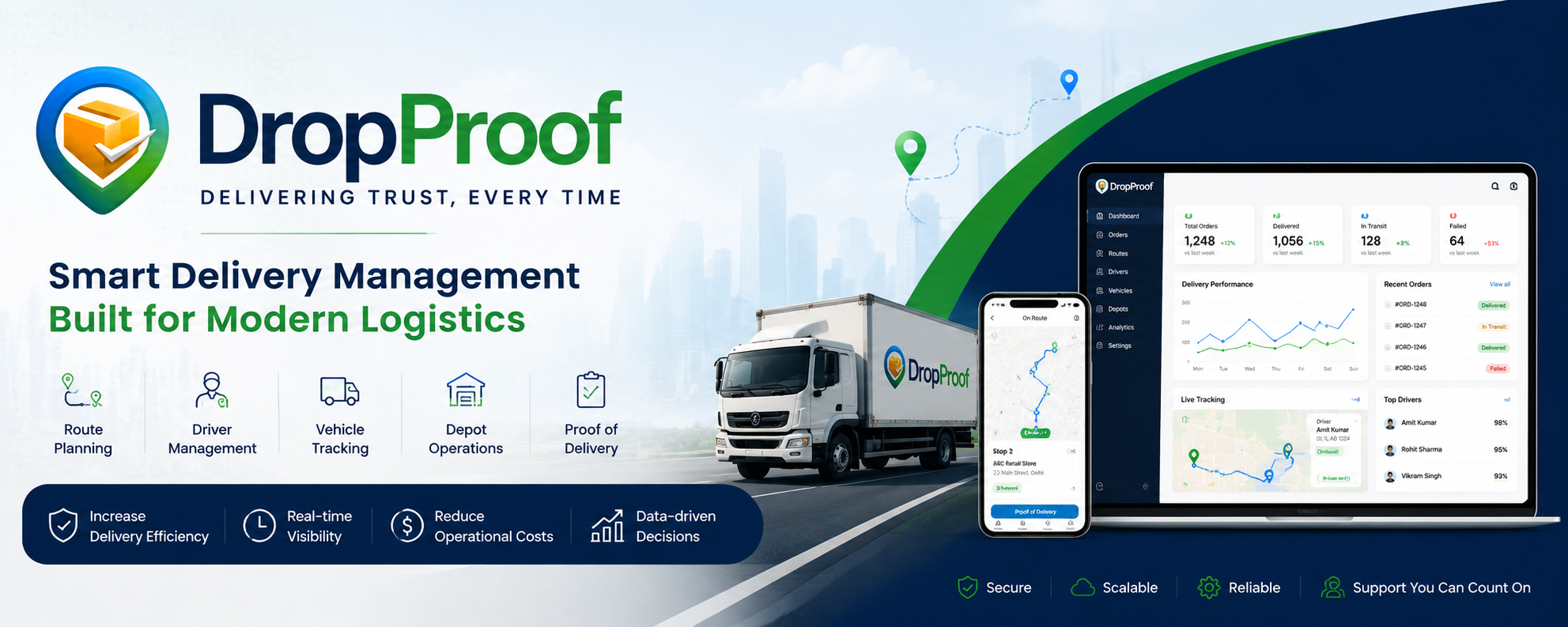
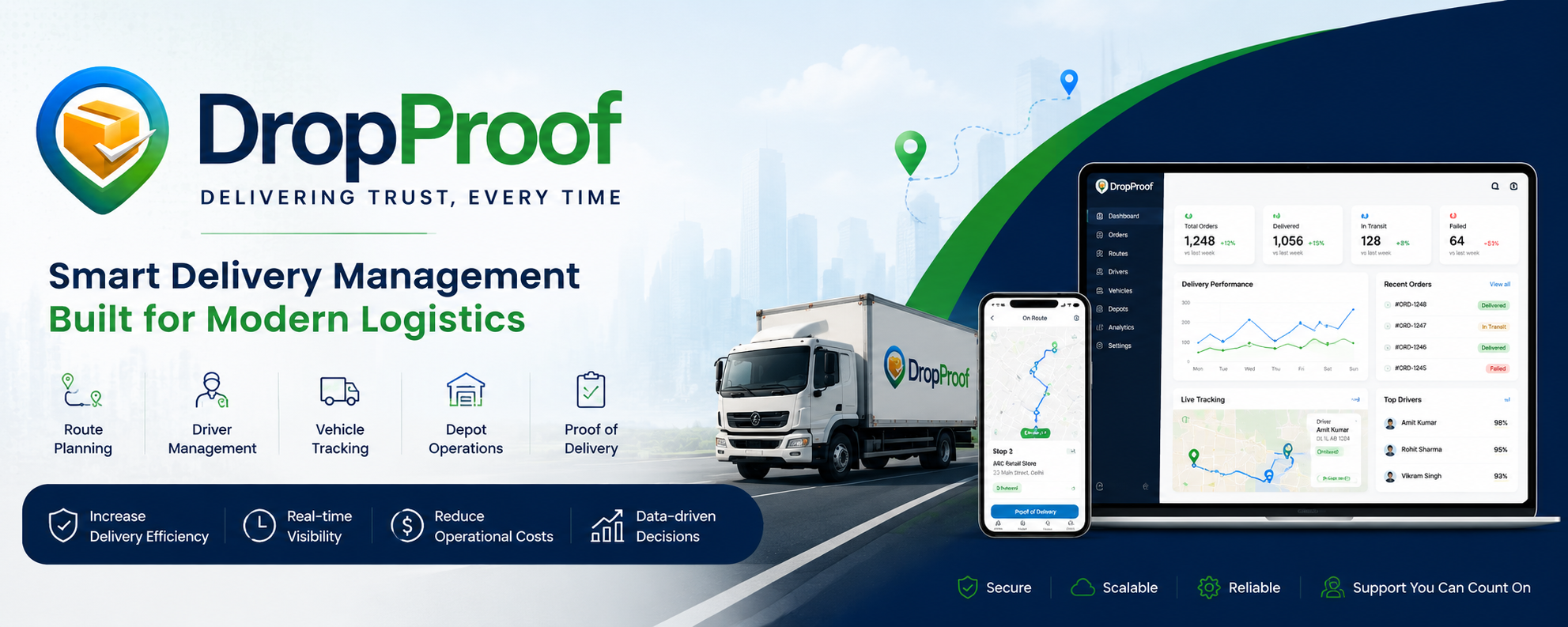
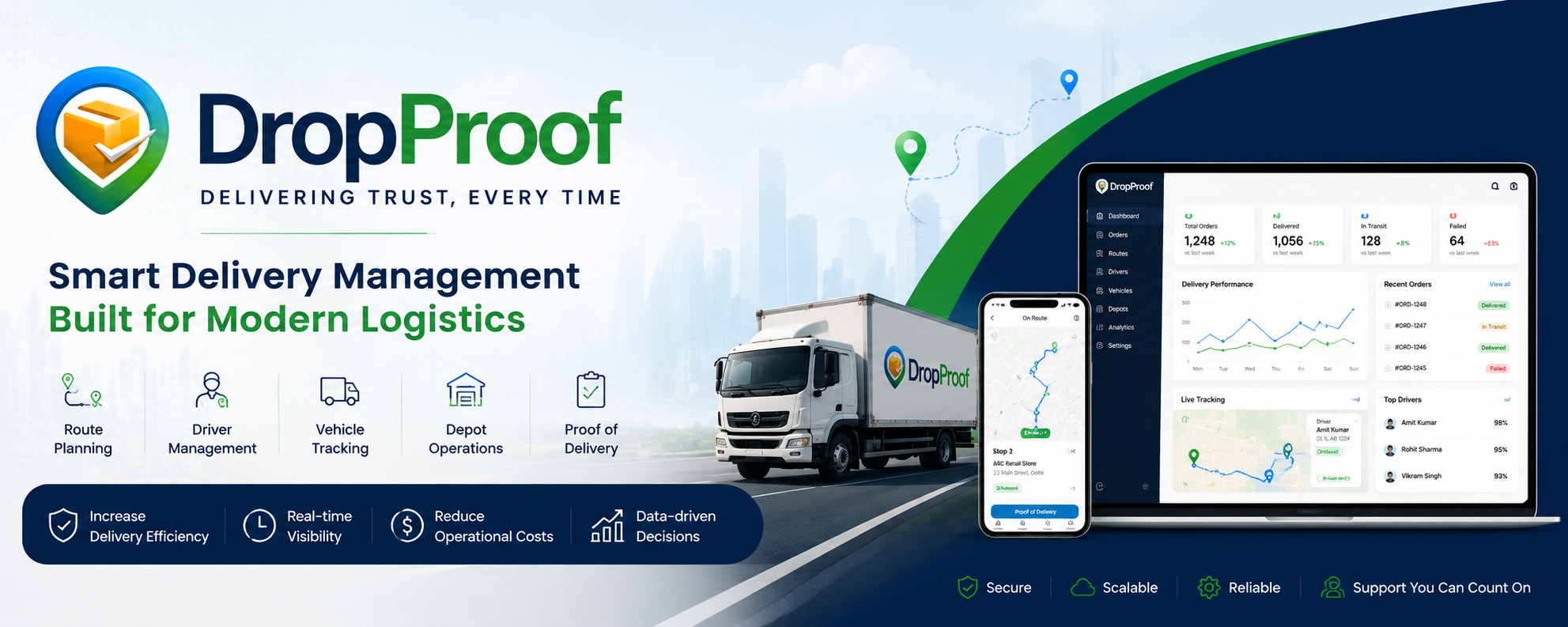
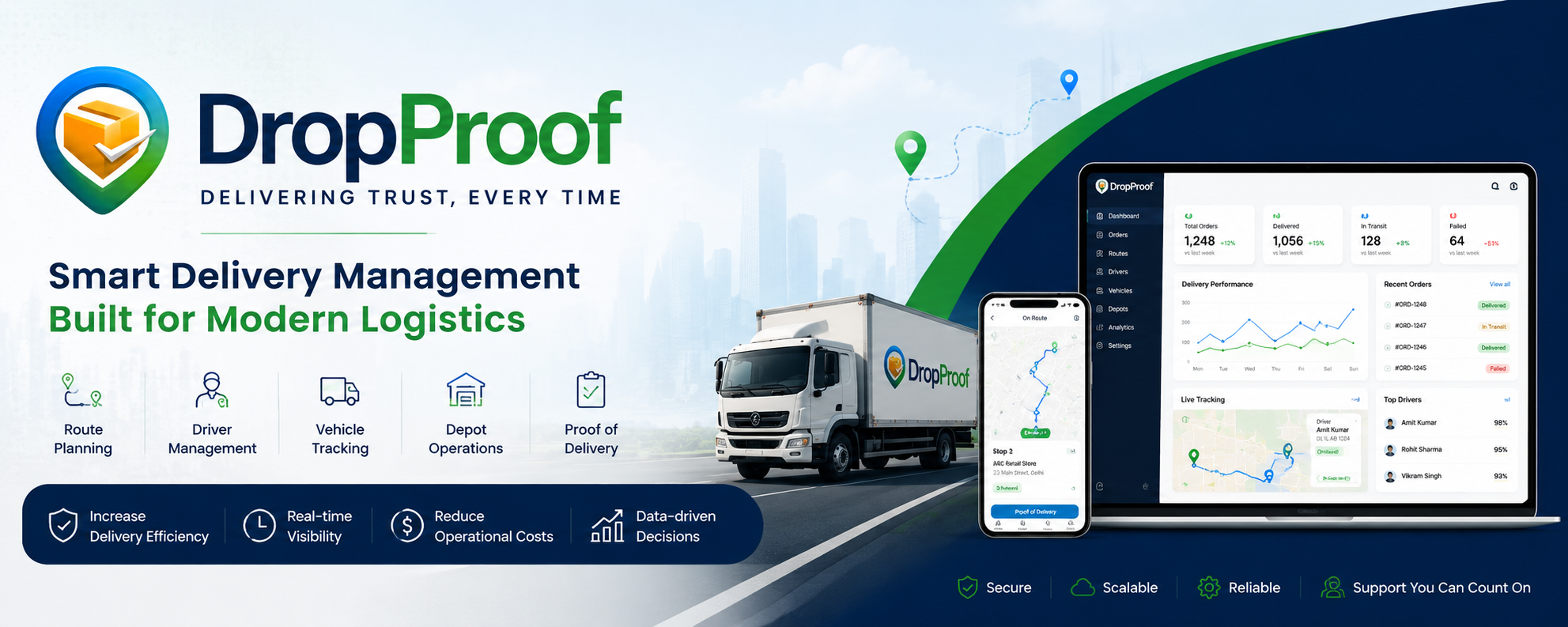
DropProof combines digital proof of delivery with the wider delivery workflow.
It provides:
- Order management
- Route planning
- Driver management
- Vehicle management
- Depot management
- Real-time tracking
- Delivery execution
- Digital proof of delivery
- Delivery photos
- Digital signatures
- GPS verification
- Delivery notes
- Reporting
- API integrations
The workflow can be managed through:
Order → Route → Driver → Track → Deliver → Capture POD
Why consider DropProof?
If your business needs more than simply collecting a signature at the end of a delivery, DropProof connects POD with the rest of the delivery operation.
Instead of using:
Order System + Route Tool + Driver Communication + POD Software
you can manage the core delivery workflow through one platform.
2. Track-POD
Best for: Dedicated electronic proof of delivery.
Track-POD focuses on electronic proof of delivery and delivery documentation.
It can be useful for businesses whose primary goal is replacing paper POD with digital signatures, photos, and delivery records.
3. PODFather
Best for: Digital POD and delivery documentation.
PODFather provides digital proof-of-delivery capabilities for businesses looking to move away from paper-based delivery documentation.
It's worth evaluating when digital POD is the primary requirement.
4. Onfleet
Best for: Last-mile delivery management.
Onfleet provides tools for dispatching, route management, driver tracking, customer communication, and delivery operations.
It's a relevant option when you want POD capabilities alongside broader last-mile delivery management.
5. Tookan
Best for: Delivery and field-service management.
Tookan provides tools for task management, driver assignment, dispatching, tracking, and field-service operations.
It can be useful for businesses looking for more than a standalone POD solution.
6. LogiNext
Best for: Logistics and delivery optimization.
LogiNext provides logistics technology covering route optimization, fleet operations, and delivery management.
It's relevant for businesses that need broader logistics capabilities around their delivery workflows.
7. Locus
Best for: Route optimization and last-mile execution.
Locus focuses on logistics technology, route planning, optimization, and last-mile execution.
It can be relevant for organizations with more complex logistics and delivery requirements.
Generic POD Software Alternatives Comparison
| Platform | Digital POD | Order Management | Route Planning | Driver Management | Tracking |
|---|---|---|---|---|---|
| DropProof | ✅ | ✅ | ✅ | ✅ | ✅ |
| Track-POD | ✅ | ✅ | ✅ | ✅ | ✅ |
| PODFather | ✅ | ⚠️ | ✅ | ✅ | ✅ |
| Onfleet | ✅ | ✅ | ✅ | ✅ | ✅ |
| Tookan | ✅ | ✅ | ✅ | ✅ | ✅ |
| LogiNext | ✅ | ✅ | ✅ | ✅ | ✅ |
| Locus | ✅ | ✅ | ✅ | ✅ | ✅ |
Capabilities can vary by product, plan, and configuration. Verify current functionality directly with each provider.
What Should You Look for in POD Software?
1. Digital Signatures
Drivers should be able to capture customer signatures electronically.
2. Delivery Photos
Photos can provide additional evidence of completed delivery.
3. GPS Verification
Location information can help verify where the delivery occurred.
4. Timestamps
Digital timestamps provide a record of when delivery activity happened.
5. Delivery Notes
Drivers should be able to record delivery instructions, exceptions, or customer notes.
6. Real-Time Tracking
Operations teams should be able to monitor active deliveries.
7. Searchable Records
Delivery records should be easy to find when customers request confirmation.
8. Integrations
Consider whether the platform can connect with:
- ERP
- WMS
- CRM
- eCommerce
- Order-management systems
When Is Generic POD Software Not Enough?
A dedicated POD solution may not be enough when your team also needs to manage:
- Routes
- Drivers
- Vehicles
- Depots
- Orders
- Delivery tracking
- Delivery exceptions
- Reporting
For example, capturing a signature confirms a delivery.
But it doesn't necessarily answer:
Which driver was assigned?
What route was used?
Where is the driver now?
Which other deliveries are pending?
Which vehicle is being used?
How many deliveries were completed today?
These questions require broader delivery-management capabilities.
Digital POD vs Complete Delivery Workflow
A standalone POD process might look like:
Delivery → Signature → POD
A complete delivery-management workflow can look like:
Order → Route → Driver → Vehicle → Tracking → Delivery → Photo → Signature → GPS → POD
The second approach gives operations teams greater visibility across the entire delivery lifecycle.
When Should You Upgrade From Basic POD Software?
Consider a broader platform if:
- Your delivery volume is increasing
- You manage multiple drivers
- You operate multiple depots
- Routes are planned separately
- Drivers use multiple applications
- Delivery tracking is limited
- Customers frequently request delivery proof
- You manually create delivery reports
- Your team switches between several tools
Who Can Benefit From a Complete Delivery Platform?
🚚 Logistics Companies
Manage drivers, routes, vehicles, tracking, and POD in one workflow.
📦 Distribution Businesses
Connect orders directly with delivery execution.
🏭 FMCG & Wholesale Businesses
Manage high-volume deliveries across multiple customers and locations.
🛒 E-commerce Delivery Teams
Combine last-mile tracking with digital proof of delivery.
🚛 Growing Delivery Fleets
Move beyond standalone POD and spreadsheets toward centralized delivery management.
DropProof vs Generic POD Software
The biggest difference is the scope of the workflow.
A generic POD tool typically focuses on:
Delivery → Proof
DropProof focuses on:
Order → Route → Driver → Vehicle → Track → Deliver → POD
That means digital proof of delivery becomes part of the complete delivery workflow rather than a separate final step.
Which Generic POD Alternative Should You Choose?
Choose DropProof if you need:
- Digital POD
- Order management
- Route planning
- Driver management
- Vehicle management
- Depot management
- Real-time tracking
- Delivery photos
- Digital signatures
- GPS verification
- Delivery notes
- Reporting
- API integrations
Choose Track-POD if:
Your primary requirement is electronic proof of delivery.
Choose PODFather if:
Your main focus is digital delivery documentation.
Choose Onfleet if:
You want POD combined with last-mile delivery management.
Choose Tookan if:
You need delivery and field-service workflows.
Choose LogiNext if:
You need broader logistics and delivery optimization.
Choose Locus if:
Advanced route optimization and last-mile execution are major priorities.
Final Thoughts
Generic POD software can solve an important part of the delivery process, but businesses often need more as their operations grow.
If you're looking for a solution that connects:
Orders → Routes → Drivers → Tracking → Delivery → POD
then DropProof is worth evaluating.
Instead of managing POD as a separate process, DropProof connects proof of delivery with the operational workflow around every delivery.
Move beyond basic POD.
Plan routes. Manage drivers. Track deliveries. Capture digital proof.
Explore DropProof → Book a Demo