Existing TMS Alternatives: 7 Best Last-Mile Delivery Management Solutions in 2026
A Transportation Management System (TMS) can play an important role in managing transportation operations.
But having a TMS doesn't always mean that every part of the last-mile delivery process is covered.
Many businesses already have a TMS but still manage parts of their delivery operation through:
- Spreadsheets
- Phone calls
- Manual route planning
- Driver group chats
- Paper proof of delivery
- Separate tracking tools
This creates a gap between transportation management and day-to-day delivery execution.
If your existing TMS manages transportation but your last-mile operations still require manual processes, a dedicated delivery-management platform may be worth considering.
This guide covers 7 solutions to evaluate when your existing TMS isn't enough for last-mile delivery operations.
What Is a TMS?
A Transportation Management System helps businesses manage transportation-related processes.
Depending on the platform and configuration, a TMS can support areas such as:
- Transportation planning
- Shipment management
- Carrier management
- Freight management
- Transportation visibility
- Scheduling
- Logistics reporting
A TMS can be extremely useful for larger transportation operations.
However, last-mile delivery introduces another layer of operational requirements.
Why Your Existing TMS May Not Be Enough for Last-Mile Delivery
A business can have a TMS and still struggle with the final stage of delivery.
For example:
TMS → Shipment Created → ??? → Customer Delivery
The missing operational layer may include:
Order → Route → Driver → Vehicle → Tracking → Delivery → POD
If these processes are managed manually or across multiple tools, your team may still experience operational inefficiencies.
Common Problems With Existing TMS Workflows
1. Driver Management
Drivers may be managed through separate applications, spreadsheets, or messaging groups.
2. Route Planning
Routes may require additional tools or manual planning.
3. Last-Mile Tracking
Transportation visibility doesn't always provide the exact driver-level workflow your operations team needs.
4. Digital POD
Drivers may still use paper receipts or separate proof-of-delivery tools.
5. Delivery Exceptions
Failed deliveries, customer issues, and delivery notes may be handled outside the TMS.
6. Multiple Tools
Operations teams may switch between a TMS, spreadsheets, WhatsApp, tracking tools, and POD systems.
7 Best Solutions to Consider
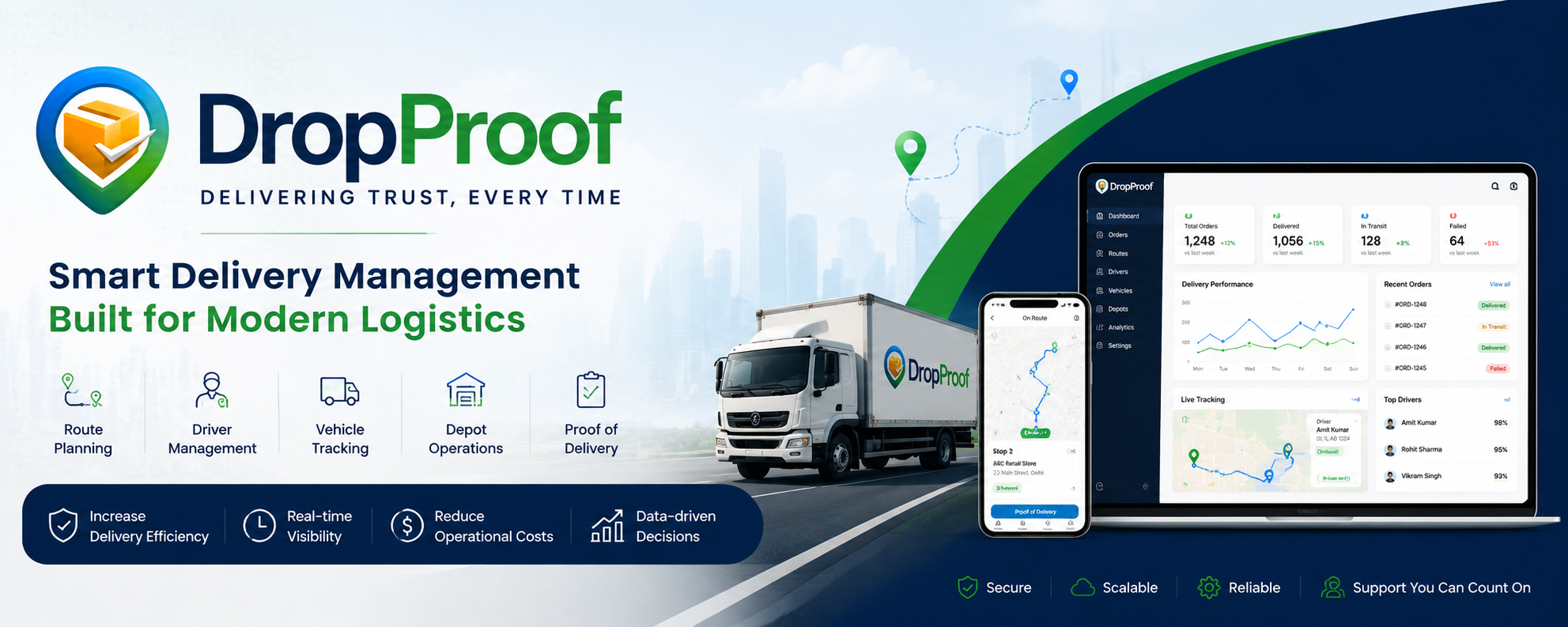
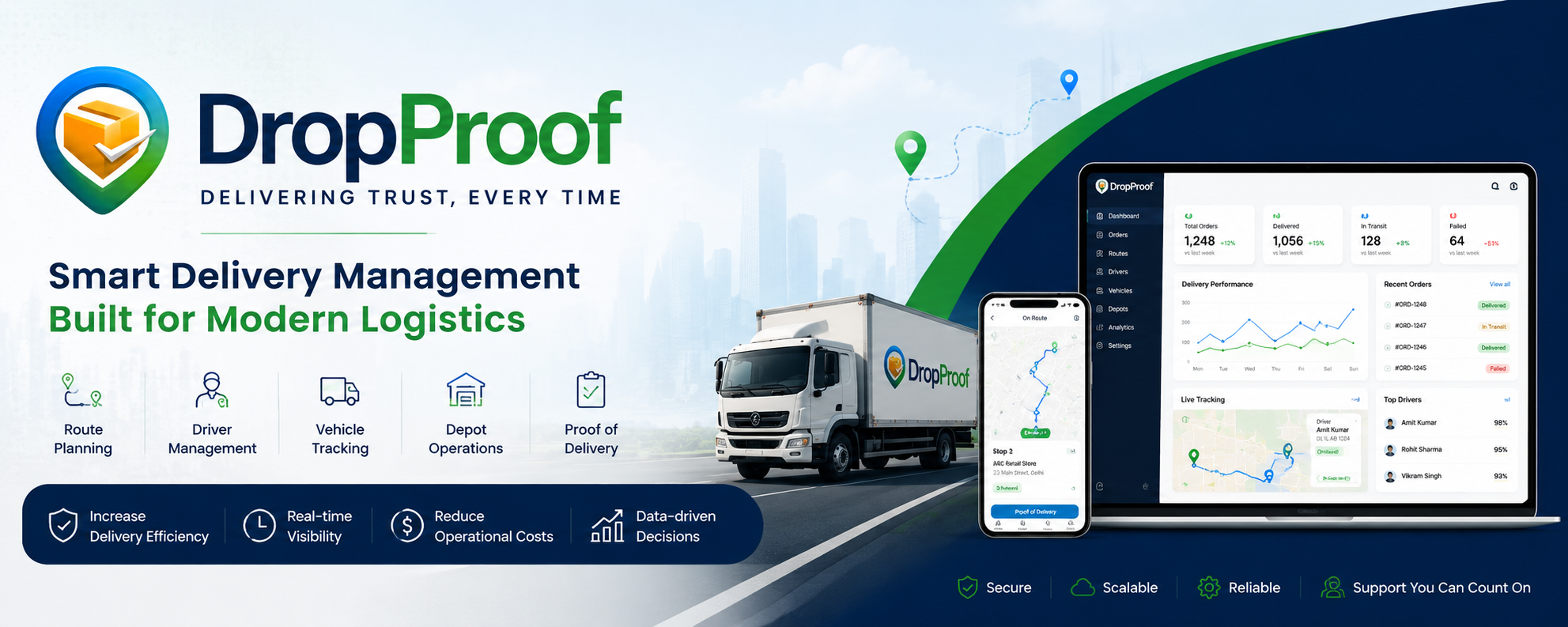
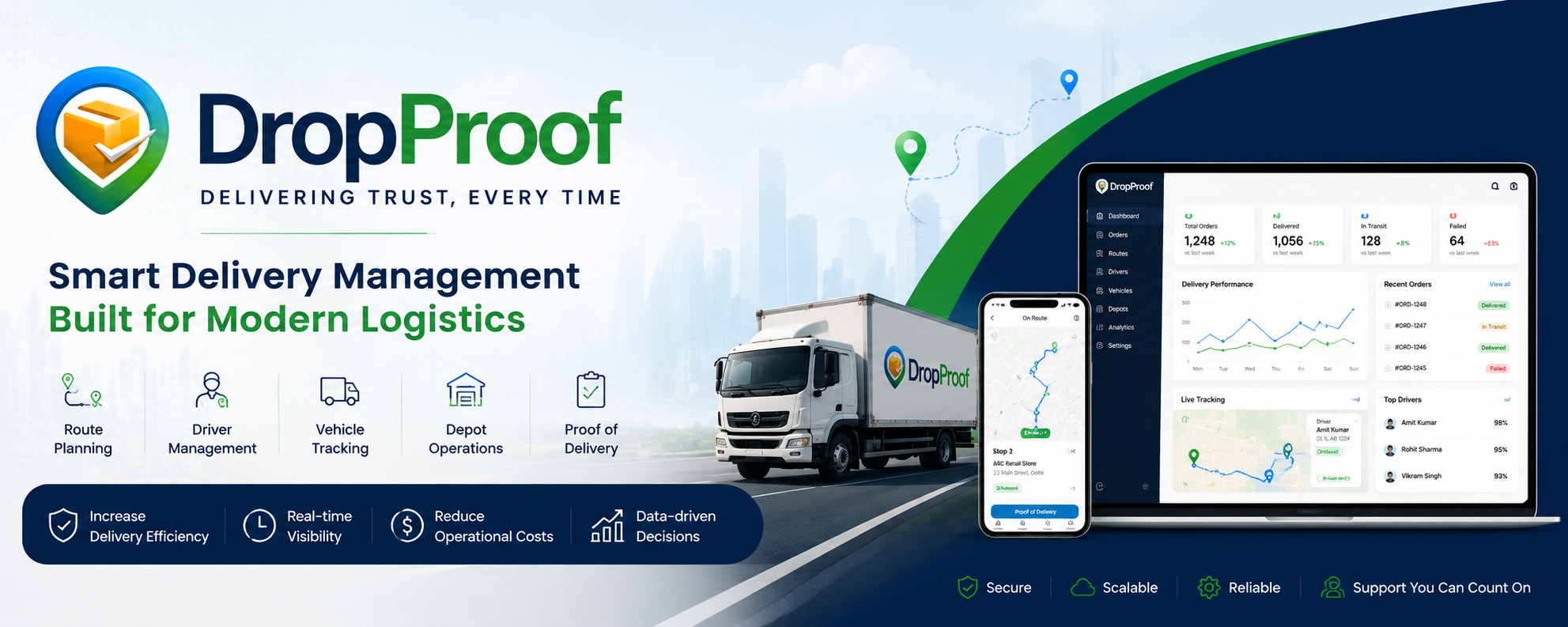
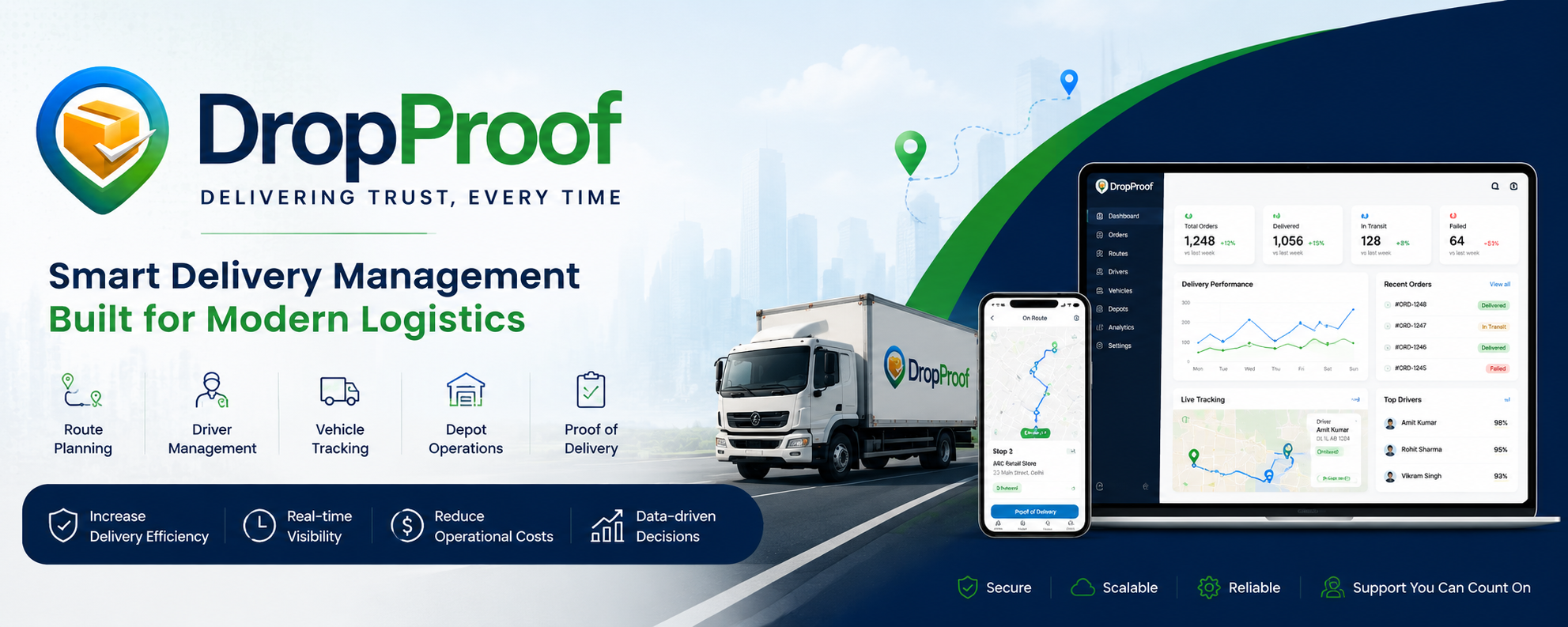
1. DropProof
Best for: Last-mile delivery management alongside your existing transportation systems.
DropProof focuses on the operational delivery workflow.
It provides:
- Order management
- Route planning
- Driver management
- Vehicle management
- Depot management
- Real-time tracking
- Delivery execution
- Digital proof of delivery
- Delivery photos
- Digital signatures
- GPS verification
- Delivery notes
- Reporting
- API integrations
The workflow can be managed through:
Order → Route → Driver → Track → Deliver → Capture POD
Why consider DropProof?
The goal isn't necessarily to replace your TMS.
Instead, DropProof can act as the last-mile operational layer for businesses that already have transportation systems but need better visibility and control over delivery execution.
Your existing TMS can continue handling transportation workflows while DropProof can focus on the operational delivery process.
2. Onfleet
Best for: Last-mile delivery management.
Onfleet provides tools for dispatching, route management, driver tracking, customer communication, and delivery operations.
It can be considered when businesses need a dedicated last-mile platform alongside broader transportation systems.
3. Locus
Best for: Route optimization and logistics operations.
Locus focuses on logistics technology, route planning, optimization, and last-mile execution.
It can be relevant for businesses with complex delivery networks and advanced optimization requirements.
4. LogiNext
Best for: Logistics and delivery optimization.
LogiNext provides logistics technology covering route optimization, fleet operations, and delivery management.
It can be useful for organizations looking to add broader logistics optimization capabilities.
5. FarEye
Best for: Transportation and delivery orchestration.
FarEye provides logistics technology focused on transportation, delivery orchestration, and visibility.
It can be relevant for larger organizations with complex transportation and delivery requirements.
6. Shipsy
Best for: Logistics orchestration.
Shipsy provides technology for logistics and transportation operations.
It can be considered by businesses looking for broader logistics-management capabilities.
7. Track-POD
Best for: Digital proof of delivery.
Track-POD focuses on electronic proof of delivery and delivery documentation.
It's useful when the biggest gap in an existing TMS is digital delivery confirmation.
Existing TMS vs Last-Mile Delivery Platform
| Capability | Existing TMS | Last-Mile Platform |
|---|---|---|
| Transportation planning | ✅ | ⚠️ |
| Shipment management | ✅ | ⚠️ |
| Carrier management | ✅ | ⚠️ |
| Driver management | ⚠️ | ✅ |
| Route planning | ⚠️ | ✅ |
| Real-time driver tracking | ⚠️ | ✅ |
| Delivery execution | ⚠️ | ✅ |
| Digital POD | ⚠️ | ✅ |
| Delivery photos | ⚠️ | ✅ |
| GPS verification | ⚠️ | ✅ |
| Depot management | ⚠️ | ✅ |
| Driver-level reporting | ⚠️ | ✅ |
Capabilities vary significantly between TMS products and configurations. Evaluate your existing system before deciding whether an additional platform is necessary.
Do You Need to Replace Your TMS?
Not necessarily.
This is one of the most important points.
If your existing TMS works well for transportation planning, replacing the entire system may be unnecessary.
Instead, identify where the operational gap exists.
For example:
Your TMS handles:
Shipment → Transportation → Carrier
Your delivery platform handles:
Order → Route → Driver → Tracking → Delivery → POD
Together, the systems can support a broader workflow.
When Should You Add a Last-Mile Delivery Platform?
Consider adding one when:
- Drivers are managed manually
- Routes are planned in spreadsheets
- Delivery tracking is limited
- POD is still paper-based
- Drivers use WhatsApp for assignments
- Delivery photos are scattered across chats
- Operations teams lack real-time visibility
- Delivery reports require manual work
- You operate multiple depots
- Last-mile operations are growing faster than your current system
What Should You Look for in a Last-Mile Platform?
1. Driver Management
Can your team assign and manage drivers digitally?
2. Route Planning
Can you create and manage routes for multiple drivers?
3. Real-Time Tracking
Can operations teams see active delivery progress?
4. Digital POD
Look for:
- Digital signatures
- Delivery photos
- GPS
- Timestamps
- Delivery notes
5. Vehicle Management
Can vehicles be connected to drivers and delivery routes?
6. Depot Management
Can multiple depots be managed from the same system?
7. Order Management
Can orders move directly into the delivery workflow?
8. Integrations
Can the platform connect to your existing TMS through APIs or other integrations?
9. Reporting
Can you measure:
- Delivery performance
- Driver performance
- Route performance
- Failed deliveries
- POD completion
Existing TMS + DropProof
For businesses that already have a TMS, DropProof doesn't necessarily need to replace it.
The objective can be to create a clearer last-mile workflow.
Existing TMS
Transportation Planning → Shipment → Logistics
DropProof
Order → Route → Driver → Vehicle → Tracking → Delivery → POD
This approach can help businesses add a dedicated delivery-execution layer without immediately replacing their existing transportation infrastructure.
Who Can Benefit From This Approach?
🚚 Logistics Companies
Continue using your existing transportation systems while improving last-mile execution.
📦 Distribution Businesses
Connect transportation planning with driver-level delivery operations.
🏭 FMCG & Wholesale Businesses
Manage routes, drivers, vehicles, depots, and delivery confirmation.
🛒 E-commerce Businesses
Improve last-mile visibility and digital proof of delivery.
🚛 Growing Fleets
Add structured delivery management without rebuilding the entire transportation stack.
Existing TMS Alternatives Comparison
| Platform | Last-Mile Focus | Route Planning | Driver Management | Tracking | Digital POD |
|---|---|---|---|---|---|
| DropProof | ✅ | ✅ | ✅ | ✅ | ✅ |
| Onfleet | ✅ | ✅ | ✅ | ✅ | ✅ |
| Locus | ✅ | ✅ | ✅ | ✅ | ✅ |
| LogiNext | ✅ | ✅ | ✅ | ✅ | ✅ |
| FarEye | ✅ | ✅ | ✅ | ✅ | ✅ |
| Shipsy | ✅ | ✅ | ✅ | ✅ | ✅ |
| Track-POD | Focused | ✅ | ✅ | ✅ | ✅ |
Capabilities can vary by product, plan, and configuration.
When DropProof Makes Sense
DropProof can be particularly useful when your team says:
"Our TMS works, but our drivers and last-mile operations are still messy."
If that sounds familiar, you may not need another full transportation-management system.
You may need a delivery-management layer.
DropProof connects:
Orders → Routes → Drivers → Vehicles → Tracking → Delivery → POD
into a centralized workflow.
Final Thoughts
Having a TMS doesn't automatically mean your last-mile operation is fully digitized.
Transportation planning and delivery execution are related, but they involve different operational requirements.
If your existing TMS handles your transportation workflows well but you're still managing:
- Drivers
- Routes
- Tracking
- Delivery exceptions
- Digital POD
- Delivery photos
- Delivery reporting
through separate tools, a dedicated last-mile platform can help close that gap.
DropProof can serve as the operational delivery layer alongside your existing transportation systems.
Already have a TMS? Improve the last mile.
Manage drivers. Plan routes. Track deliveries. Capture digital proof.
Explore DropProof → Book a Demo