What Is a Transport Management Solution? Benefits, Features, and Use Cases
Managing transportation efficiently is essential for logistics companies, distributors, manufacturers, and businesses that handle regular deliveries. From planning routes and assigning vehicles to tracking shipments and controlling fuel expenses, transportation involves several activities that require coordination.
When these activities are managed manually, businesses can experience delayed deliveries, higher operating costs, poor fleet utilization, and limited visibility into daily operations.
A Transport Management Solution helps businesses organize, automate, and monitor transportation activities through a centralized digital platform. It allows teams to plan deliveries, manage vehicles, coordinate drivers, track shipments, and improve operational efficiency.
In this guide, we explore what a transport management solution is, how it works, its key features, its benefits, and how businesses can use transport management software to improve their logistics operations.
What Is a Transport Management Solution?
A Transport Management Solution is a software-based platform that helps businesses plan, execute, monitor, and optimize their transportation operations.
It brings essential transportation activities into one system, making it easier for logistics managers to coordinate vehicles, drivers, shipments, delivery schedules, and routes.
Instead of relying on spreadsheets, phone calls, and disconnected tools, businesses can use a centralized platform to manage transportation information and coordinate daily activities.
Depending on the software, a transport management solution can support:
- Transportation planning and scheduling
- Fleet and vehicle management
- Driver assignment and coordination
- Route planning and optimization
- Shipment and delivery tracking
- Transportation cost monitoring
- Delivery status management
- Digital proof of delivery
- Transportation reporting and analytics
For example, consider a logistics company that delivers products to 100 customers every day.
Without a centralized system, its operations team might spend hours assigning vehicles, sharing delivery instructions with drivers, tracking shipments through phone calls, and updating delivery records manually.
With transport management software, the company can organize delivery information, assign shipments, monitor progress, and maintain digital delivery records from a single platform.
The result is a more organized transportation process with better visibility and control.
How Does a Transport Management Solution Work?
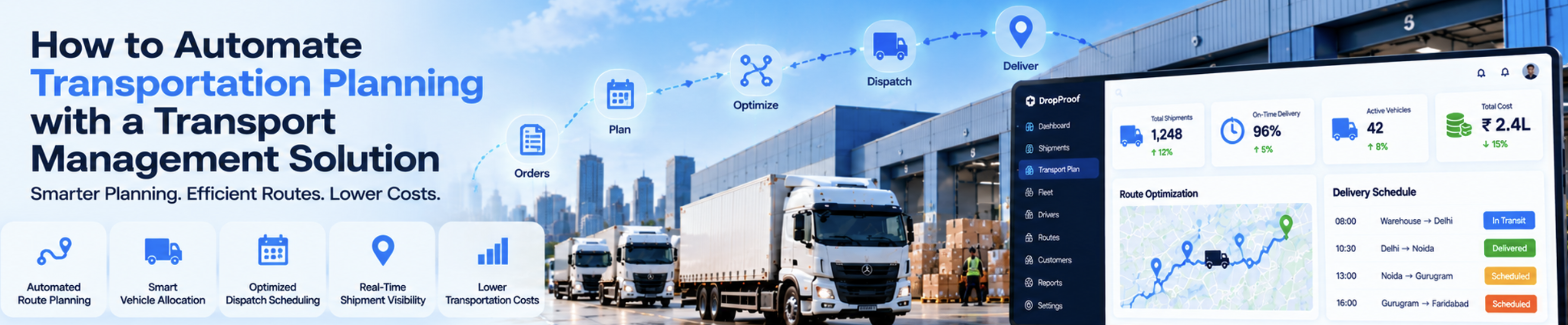
A transport management solution connects different stages of the transportation process, from planning and dispatch to delivery confirmation and reporting.
Although the exact workflow depends on the software, most systems follow a similar process.
1. Transportation Planning
The process begins by identifying the shipments that need to be transported.
The system helps teams organize shipment details, delivery locations, customer requirements, and scheduled delivery dates.
This information provides a foundation for planning transportation activities.
2. Vehicle and Driver Assignment
Once shipments are ready, the operations team assigns suitable vehicles and drivers.
Depending on the platform, assignments can consider vehicle capacity, delivery locations, driver availability, and shipment requirements.
This helps businesses coordinate transportation resources more effectively.
3. Route Planning and Optimization
Planning efficient routes is essential for reducing unnecessary travel and improving delivery performance.
Transport planning software helps teams organize delivery stops and identify practical routes based on available information.
More advanced systems may support route optimization using delivery priorities, distance, traffic information, time windows, and vehicle constraints.
4. Dispatch and Transportation Execution
After planning, shipments are dispatched for delivery.
Drivers receive the necessary delivery information, while operations teams coordinate dispatch activities and monitor shipment progress.
Digital workflows can reduce dependence on repeated phone calls and manual updates.
5. Shipment Tracking and Delivery Monitoring
During transportation, businesses need to understand where shipments are and whether deliveries are progressing as expected.
Depending on the available integrations, a transportation management system may provide GPS-based vehicle tracking, status updates, estimated arrival times, and delivery notifications.
This improves visibility for operations teams and customers.
6. Proof of Delivery and Reporting
Once a shipment reaches its destination, the driver or delivery team records the delivery outcome.
Proof of delivery may include a digital signature, photograph, recipient confirmation, timestamp, or other supporting information.
The collected data can support operational reporting, customer service, billing processes, and performance analysis.
Key Features of a Transport Management Solution
The right transport management solution should address the operational challenges that matter most to your business.
Here are the key features to consider.
1. Transportation Planning and Scheduling
Transportation planning helps businesses organize shipments, delivery schedules, and dispatch activities.
A centralized system makes it easier to coordinate transportation requirements and identify scheduling conflicts before they affect operations.
This is particularly useful for businesses handling multiple deliveries, changing customer requirements, or recurring transportation schedules.
2. Fleet Management
Fleet management capabilities help businesses maintain visibility into their vehicles and transportation resources.
Depending on the software, these capabilities may include vehicle records, availability, capacity information, maintenance schedules, and utilization reports.
Better fleet visibility helps businesses make informed decisions about vehicle allocation and resource planning.
3. Route Planning and Optimization
Route planning helps determine how vehicles should travel between pickup and delivery locations.
Route optimization can improve transportation efficiency by considering factors such as delivery sequences, distance, vehicle capacity, and delivery time windows.
Efficient routes can help reduce unnecessary mileage and improve delivery scheduling.
4. Driver Management
Driver management features help operations teams coordinate drivers and their assigned deliveries.
Depending on the platform, businesses may be able to manage driver information, communicate delivery instructions, monitor assignment status, and review delivery performance.
This helps establish a more consistent workflow between drivers and dispatch teams.
5. Real-Time Tracking and Visibility
Shipment and vehicle visibility helps businesses monitor transportation activities while deliveries are in progress.
GPS tracking and automated status updates, where supported, allow operations teams to identify delays and respond to delivery exceptions.
Improved visibility also makes it easier to provide customers with accurate delivery updates.
6. Digital Proof of Delivery
Proof of delivery provides evidence that a shipment has reached its intended destination.
Digital proof of delivery can replace paper-based documentation with electronic records containing details such as delivery timestamps, recipient information, photographs, and signatures.
This reduces paperwork and makes delivery information easier to retrieve.
7. Transportation Cost Management
Transportation expenses can include fuel, driver payments, vehicle maintenance, tolls, carrier charges, and other operating costs.
A transport management solution can help businesses organize transportation expenses and analyze cost trends.
When reliable cost and shipment data are available, managers can identify expensive routes, underutilized vehicles, and opportunities to improve operational efficiency.
8. Reporting and Analytics
Transportation reports help businesses understand how their operations are performing.
Depending on the system, common performance indicators include:
- On-time delivery rate
- Average delivery time
- Cost per shipment
- Vehicle utilization
- Fuel consumption
- Failed delivery rate
- Average distance travelled
- Delivery completion rate
These insights help managers identify operational bottlenecks and make data-driven decisions.
9. Customer and Shipment Management
Businesses handling large shipment volumes need an organized way to manage delivery information and customer requirements.
Centralized shipment records help teams access order details, delivery addresses, shipment status, and delivery history.
This can improve coordination between customer service, dispatch, warehouse, and transportation teams.
10. Integration With Existing Business Systems
Transportation operations rarely work in isolation.
Businesses may need their transport management software to exchange information with enterprise resource planning systems, warehouse management systems, order management platforms, accounting software, and customer relationship management tools.
Integrations can reduce duplicate data entry and help maintain consistency across business operations.
Before choosing a platform, businesses should verify which integrations are available and whether custom development is required.
Benefits of Using a Transport Management Solution
Implementing a transport management solution can improve several aspects of transportation operations.
The results depend on the organization's size, existing processes, implementation quality, and the features available in the selected software.
1. Improved Operational Efficiency
Manual transportation planning requires time and coordination.
A centralized platform helps teams organize shipments, assign vehicles, coordinate drivers, and monitor deliveries more efficiently.
By reducing repetitive administrative work, operations teams can focus on exceptions, customer requirements, and service improvements.
2. Better Control Over Transportation Costs
Transportation expenses can increase when vehicles travel unnecessary distances, deliveries are poorly scheduled, or resources are not used effectively.
Transport management software helps businesses identify these inefficiencies through planning tools and operational reports.
Improved route planning and vehicle utilization can contribute to lower transportation costs.
3. More Reliable Deliveries
Delivery delays can affect customer satisfaction, business relationships, and operational planning.
A transport management solution helps teams coordinate schedules, monitor progress, and identify delays earlier.
This allows businesses to take corrective action when transportation problems arise.
4. Increased Fleet Utilization
Poor vehicle allocation can leave some vehicles underused while others operate beyond their practical capacity.
Fleet visibility and shipment planning help businesses distribute transportation workloads more effectively.
Better utilization can reduce the need for unnecessary vehicle deployments and improve the productivity of existing resources.
5. Improved Customer Experience
Customers increasingly expect reliable delivery information and timely updates.
A transportation management system can help businesses provide more consistent shipment status information and respond to delivery-related questions.
When supported by customer notifications and tracking features, the system can also reduce uncertainty around delivery schedules.
6. Reduced Paperwork and Manual Errors
Paper-based processes can create problems such as missing documents, incorrect shipment information, and delayed record updates.
Digital transportation workflows help standardize data entry and maintain electronic records.
This makes delivery information easier to access and reduces dependence on manual documentation.
7. Better Decision-Making
Managers need reliable information to evaluate transportation performance.
A transport management solution can consolidate operational data into reports and dashboards.
These insights help businesses identify recurring delays, analyze transportation costs, evaluate vehicle utilization, and improve planning decisions.
8. Greater Operational Visibility
When shipment information is scattered across spreadsheets, emails, and messaging applications, managers may struggle to understand the current status of deliveries.
A centralized platform provides a more consistent view of transportation activities.
Depending on its capabilities, it may also offer live tracking, automated alerts, and delivery exception reporting.
9. Easier Business Expansion
As shipment volumes increase, manual transportation processes become harder to manage.
A scalable transportation management system can help businesses standardize workflows and coordinate larger numbers of shipments, drivers, and vehicles.
This makes it easier to expand operations without relying entirely on additional administrative effort.
10. Improved Accountability
Clear assignments and digital records help businesses understand who is responsible for specific transportation activities.
Delivery timestamps, shipment status changes, proof of delivery, and performance reports can support better accountability across teams.
This also helps managers investigate delivery disputes and identify process improvements.
Transport Management Solution vs. Transport Management Software
The terms transport management solution and transport management software are often used interchangeably.
Both generally refer to digital tools designed to manage transportation activities.
However, the word solution can describe a broader combination of software, implementation, integrations, support, and operational processes.
For example, a business may purchase transport management software and configure it to manage shipments and deliveries.
A broader transport management solution may also include driver applications, integration with existing business systems, onboarding, reporting configuration, and ongoing support.
The exact distinction depends on how individual providers use these terms.
When evaluating vendors, focus on the capabilities, implementation requirements, and business outcomes rather than the terminology alone.
What Is the Difference Between a Transport Management Solution and a Transportation Management System?
A Transportation Management System, commonly called a TMS, is a category of software used to plan, execute, and optimize the movement of goods.
A transport management solution may be a TMS or a broader service offering built around transportation management.
The terms overlap considerably in the market.
Depending on the platform, a TMS may support:
- Freight planning and carrier selection
- Shipment execution
- Freight rate management
- Transportation cost analysis
- Carrier performance monitoring
- Shipment tracking
- Freight settlement and documentation
Some platforms focus on large-scale freight procurement and carrier networks, while others emphasize fleet dispatch, last-mile delivery, and operational coordination.
Businesses should select a system according to their transportation model and operational requirements.
Who Needs a Transport Management Solution?
A transport management solution can benefit businesses that coordinate frequent shipments, operate vehicles, or depend on reliable transportation processes.
1. Logistics and Transportation Companies
Logistics providers coordinate shipments across customers, vehicles, routes, and delivery locations.
A centralized platform helps them manage dispatch operations, monitor deliveries, and maintain shipment records.
2. Third-Party Logistics Providers
Third-party logistics providers, or 3PL companies, manage transportation and other logistics activities for clients.
Transport management software can help them coordinate client shipments, organize vehicle assignments, and improve operational visibility.
3. Manufacturers
Manufacturers need to transport raw materials, components, and finished products between suppliers, production facilities, warehouses, and customers.
A transport management solution can improve coordination between dispatch and transportation teams.
4. Distributors and Wholesalers
Distributors frequently deliver goods to retailers, dealers, and business customers.
Route planning, vehicle allocation, and delivery monitoring can help distributors coordinate recurring deliveries and manage transportation resources.
5. E-Commerce and Retail Businesses
Retailers and e-commerce businesses must coordinate deliveries across multiple locations and customer orders.
Transportation management capabilities can support dispatch planning, delivery tracking, and proof of delivery.
Businesses with large last-mile delivery operations may benefit from additional route optimization and driver management capabilities.
6. Businesses Operating Their Own Fleets
Companies that operate their own commercial vehicles need visibility into vehicle allocation, utilization, driver assignments, and delivery performance.
A transport management solution can help bring these activities into a more structured workflow.
7. Companies Managing Intercity Transportation
Businesses moving goods between cities may need to coordinate long-distance routes, vehicle availability, shipment schedules, and delivery documentation.
Transportation management software can help teams organize these activities and maintain shipment visibility.
Real-World Use Cases of a Transport Management Solution
Understanding practical use cases can help businesses identify where transportation management software may deliver the greatest value.
Use Case 1: Last-Mile Delivery Management
An e-commerce delivery company handles hundreds of orders across a city every day.
Without centralized planning, dispatchers may struggle to group deliveries, assign drivers, and monitor delivery progress.
A transport management solution can help the company organize delivery stops, coordinate drivers, and track delivery status.
For businesses managing multiple daily deliveries, these capabilities can improve dispatch coordination and provide better visibility into delivery performance.
Use Case 2: Fleet Dispatch for Logistics Companies
A logistics company operates a fleet of commercial vehicles serving multiple customers.
Its operations team must assign shipments, coordinate drivers, and ensure vehicles are available when needed.
Transport management software can help centralize vehicle assignments, shipment details, and dispatch information.
This makes it easier for managers to coordinate daily operations and identify resource allocation problems.
Use Case 3: Distribution and Wholesale Deliveries
A distributor delivers products to retailers across several locations.
Manual planning can make it difficult to coordinate delivery sequences, vehicle capacity, and delivery schedules.
A transportation management system can help organize shipments and delivery stops while maintaining records of completed deliveries.
Over time, operational reports can help the distributor identify inefficient routes and improve delivery planning.
Use Case 4: Intercity Freight Transportation
A transportation business moves goods between cities and industrial hubs.
It needs to coordinate pickup schedules, vehicles, shipment information, and delivery confirmations.
A transport management solution can help teams maintain shipment records and coordinate transportation activities across locations.
Where integrations are available, the system may also exchange information with other logistics and business applications.
Use Case 5: Proof of Delivery and Delivery Verification
A business frequently receives questions about whether shipments were delivered successfully.
When delivery records are maintained on paper, finding the correct document can take time.
Digital proof of delivery helps businesses maintain electronic records of completed deliveries.
This makes it easier to retrieve delivery evidence, investigate disputes, and improve customer service.
How to Choose the Right Transport Management Solution
Selecting the right software requires more than comparing prices and feature lists.
Businesses should evaluate their operational requirements and identify which capabilities will deliver the most value.
Consider the following factors.
Understand Your Transportation Requirements
Start by identifying your shipment volumes, delivery types, fleet size, service areas, and existing operational challenges.
A company managing last-mile deliveries may need route planning and driver coordination, while a freight business may prioritize carrier management and freight cost analysis.
Evaluate Essential Features
Create a list of required capabilities, such as transportation planning, shipment tracking, fleet management, reporting, and proof of delivery.
Separate essential features from optional capabilities to make vendor comparisons easier.
Check Ease of Use
Software should simplify transportation operations rather than introduce unnecessary complexity.
Evaluate the interface, driver workflow, onboarding process, and training requirements before making a decision.
Review Integration Options
Check whether the platform integrates with your existing business systems.
Consider API availability, data synchronization, implementation effort, and any additional integration costs.
Assess Reporting Capabilities
Review whether the platform provides the operational reports and performance indicators your business needs.
Useful reporting should help managers identify problems and make decisions rather than simply display large volumes of data.
Compare Pricing and Total Cost
Evaluate subscription fees, user limits, vehicle limits, implementation charges, support costs, and optional feature pricing.
The cheapest product may not provide the best overall value if important capabilities require expensive upgrades.
Consider Scalability
Choose a solution that can support your expected business growth.
Check whether the software can accommodate additional users, vehicles, shipment volumes, locations, and integrations.
Request a Demonstration
A product demonstration allows your team to evaluate the software using realistic transportation scenarios.
Ask vendors to demonstrate how they handle shipment assignment, dispatch, delivery updates, proof of delivery, and reporting.
This helps you understand whether the product fits your actual workflow.
How DropProof Can Support Transportation Operations
Businesses looking to improve delivery coordination need software that helps them organize transportation workflows and maintain visibility into shipment activities.
DropProof is a logistics and delivery management platform designed to support transportation-related business operations.
Depending on the features configured for your business, a platform such as DropProof can help teams manage shipment information, coordinate delivery activities, and organize operational workflows through digital tools.
Businesses evaluating a transport management solution should identify their specific requirements and explore the available capabilities before deciding which platform is the right fit.
Explore the relevant DropProof transportation and logistics solutions to understand how digital tools can support your business operations.
Frequently Asked Questions
1. What is a transport management solution?
A transport management solution is software that helps businesses plan, execute, monitor, and optimize transportation activities. It can support shipment planning, vehicle allocation, route management, delivery tracking, and transportation reporting.
2. What is the difference between transport management software and a TMS?
Transport management software is a general term for software used to manage transportation operations. A Transportation Management System, or TMS, is a commonly used category of transportation software. The terms often overlap, and the exact capabilities depend on the provider.
3. How does a transport management solution reduce transportation costs?
It can help businesses identify inefficient routes, improve vehicle utilization, organize delivery schedules, and analyze transportation expenses. Actual savings depend on the software's capabilities, the quality of operational data, and implementation.
4. Which businesses need transport management software?
Logistics providers, manufacturers, distributors, wholesalers, retailers, e-commerce businesses, and companies operating commercial fleets can benefit from transportation management software.
5. What features should a transport management solution include?
Common features include transportation planning, vehicle and driver management, route planning, shipment tracking, digital proof of delivery, reporting, and integrations. The ideal feature set depends on the company's transportation requirements.
6. Is transport management software suitable for small businesses?
Yes. Small businesses managing regular deliveries or commercial vehicles may benefit from better planning and digital records. They should select software that matches their current needs, budget, and expected growth.
7. What is transport planning software?
Transport planning software helps businesses organize shipments, allocate transportation resources, schedule deliveries, and plan routes. Depending on the platform, it may also support route optimization and delivery performance analysis.
8. How long does it take to implement a transport management solution?
Implementation time varies according to the software, business complexity, data migration requirements, integrations, and employee training. A simple implementation may take less time than a system involving multiple locations and custom integrations.
9. Can a transport management solution improve customer satisfaction?
It can improve customer satisfaction by supporting more reliable delivery planning, better shipment visibility, and faster access to delivery information. Results depend on how effectively the business implements and uses these capabilities.
10. How do I choose the best transport management solution?
Evaluate your operational requirements, essential features, ease of use, integration options, reporting, pricing, scalability, and vendor support. A product demonstration using realistic business scenarios can help you make an informed decision.
Conclusion
A transport management solution helps businesses bring transportation planning, dispatch, shipment monitoring, and delivery documentation into a more organized digital workflow.
For logistics companies, manufacturers, distributors, and businesses operating their own fleets, the right software can improve operational visibility, support better resource utilization, reduce manual work, and strengthen delivery coordination.
The key is to choose a platform that matches your transportation requirements and can support your business as it grows.
If your team is still relying on spreadsheets, phone calls, and disconnected systems to manage deliveries, exploring a modern transport management solution can be a practical first step toward more efficient transportation operations.