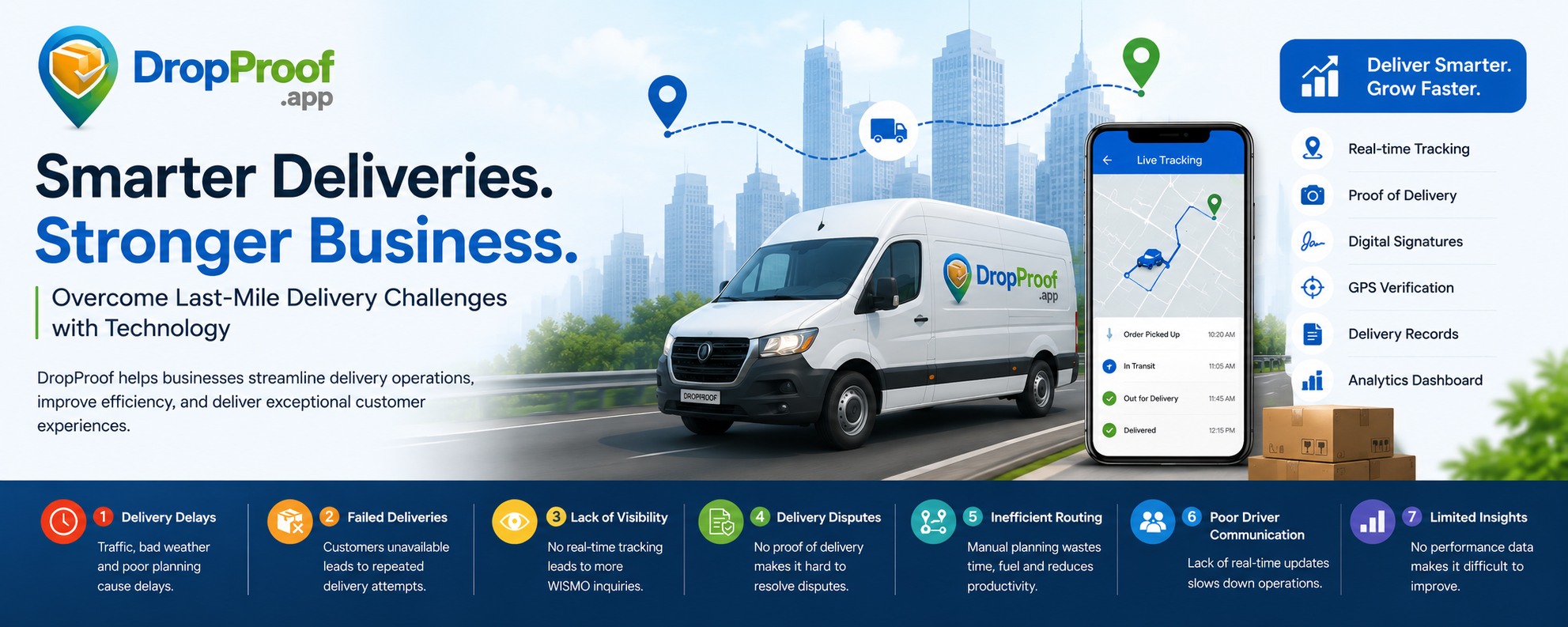
7 Common Last-Mile Delivery Challenges and How Technology Solves Them
The last mile is often the most expensive and complex stage of the delivery journey. It directly impacts customer satisfaction, operational costs, and business reputation.
Whether you're managing local deliveries or a nationwide logistics network, overcoming last-mile challenges is essential for sustainable growth.
Let's explore the most common issues and how technology can help solve them.
1. Delivery Delays
Traffic congestion, unexpected road closures, and inefficient planning often cause delays.
Solution
Modern delivery software uses intelligent route planning and GPS navigation to help drivers choose the fastest routes and avoid unnecessary delays.
2. Failed Deliveries
Customers may not be available when drivers arrive, resulting in repeat delivery attempts that increase costs.
Solution
Businesses can reduce failed deliveries by providing accurate ETAs, delivery notifications, and allowing customers to track their orders in real time.
3. Lack of Delivery Visibility
Without live tracking, customers frequently contact support asking:
-
Where is my order?
-
When will it arrive?
This increases customer service workload.

Solution
Real-time GPS tracking allows both customers and dispatch teams to monitor deliveries from dispatch to completion.
4. Delivery Disputes
Customers occasionally claim they never received a package.
Without proper records, resolving disputes becomes difficult.
Solution
Digital Proof of Delivery (POD) captures:
-
Customer signatures
-
Delivery photos
-
GPS location
-
Timestamp
-
Driver notes
This provides reliable evidence for every completed delivery.
5. Inefficient Route Planning
Manual route planning wastes fuel, increases travel time, and limits the number of deliveries completed each day.
Solution
Route optimization software automatically suggests the most efficient delivery sequence, helping businesses reduce fuel expenses while improving driver productivity.
6. Poor Driver Communication
Drivers often need to call dispatchers for updated addresses, customer instructions, or delivery changes.
This slows down operations.
Solution
Mobile delivery apps keep drivers connected with dispatch teams through centralized delivery information and real-time updates.
7. Limited Performance Insights
Without reporting tools, managers struggle to identify delivery bottlenecks and improve operations.
Solution
Delivery analytics dashboards provide insights into:
-
On-time delivery rate
-
Driver performance
-
Average delivery time
-
Failed delivery percentage
-
Customer satisfaction trends
These reports help businesses make informed operational decisions.
Why Technology Is Essential for Modern Delivery Operations
As delivery expectations continue to rise, businesses need more than spreadsheets and phone calls to manage their fleets.
Digital delivery management solutions improve:
-
Operational efficiency
-
Driver productivity
-
Customer satisfaction
-
Delivery accuracy
-
Business scalability
Technology transforms delivery operations from reactive to proactive.
How DropProof Helps
DropProof is designed to simplify modern delivery operations by providing businesses with the tools they need to manage deliveries efficiently.
With DropProof, you can:
-
Capture digital Proof of Delivery
-
Record customer signatures
-
Upload delivery photos
-
Verify GPS locations
-
Monitor delivery status in real time
-
Maintain complete delivery records
-
Improve accountability across your fleet
Whether you manage ten deliveries a day or thousands, DropProof helps streamline operations while building customer trust.
Final Thoughts
Last-mile delivery is no longer just about getting packages from point A to point B. It's about delivering a reliable customer experience.
By adopting modern delivery management technology, businesses can reduce costs, eliminate inefficiencies, and stay competitive in today's fast-moving logistics industry.
DropProof provides the visibility, accountability, and digital tools businesses need to deliver with confidence.